Today's
EarthStation1.com 15% (Or More!) Off Commemorative Memorial Title:
TV Commercials: The Cable Age Classics II DVD, Download, USB Drive
Today, September 3, 2026
(#JCKaelin here : I first made this dish
for my wife & I on the Friday evening of National Welsh
Rarebit Day 2021 and we think it's great! It's really easy - warm
5 oz milk & 2 oz butter, add 1 pound grated sharp cheddar, add
a dash each of cayenne and worcestershire sauce, and 1/2 teaspoon
salt and serve on toast! #Mmm!!! [Warning: may induce a vegetarian
wife such as mine to spontaneously sing "Kill The Wabbit!"
while cooking! :) ) ========= September 3: National Welsh Rarebit
Day: -- Today we celebrate the humble but delectable Welsh dish
'rarebit': thickly-sliced bread with loads of decadent cheese
sauce poured on top -- just thinking about that simply-spiced
melted cheese sounds mouthwateringly good! It is uncertain why
this date was chosen, but what we are sure of is that this
centuries-old dish doesn't contain any rabbit. The term 'rarebit'
is taken from the Welsh language, and Welsh rarebit made its first
appearance in 1725, appearing in print in "The Art Of
Cookery," in which the author had given several variations
for the dish according to British countries. The key ingredients
and preparation for all the recipes were the same except for a few
alterations; for English rarebit, bread was basted in wine after
toasting, and cheese was broiled at the top. The bread used for
preparing Scottish rarebit was buttered, and Welsh rarebit was the
same except the bread was both buttered and spread with mustard.
Over the years, there have been several other versions of the
dish. The addition of eggs on top results in what is called a
'Golden Buck.' Tomatoes turn the dish into a 'Blushing Bunny.'
Some people experiment with the ingredients by adding caramelized
onions too. In the 18th century, it was common to serve Welsh
rarebit as a delicious and filling supper. It was served with ale
in taverns. The cheese sauce is similar to fondue, except standard
European fondue utilizes Swiss cheeses, while rarebit uses
cheddar. Today, Welsh rarebit is still considered a hearty meal
that is complemented with soup or tossed salad. On Sale Until
Midnight Tonight PT!
https://store.earthstation1.com/tv-commercials-the-cable-age-classics-ii-dvd.html
Today's
EarthStation1.com 15% (Or More!) Off Commemorative Memorial Title:
Classic Movie Trailers & Drive-In Movie Ads DVD, Download, USB
Drive
Today, September 3, 2026
September 3: National Cinema Day: -- A
day for encouraging movie lovers all across the country to return
to the theatre and enjoy a movie on the big screen! We all have
memories of going to the movie theater. The excitement we felt
waiting in anticipation for our favorite movie star to appear on
the screen was exciting. No movie was complete without a box of
fresh buttered popcorn and our favorite drink in hand. If we were
lucky, we were able to get some candy, too. On National Cinema
Day, everyone is encouraged to go to a movie and relive that
special feeling of seeing your favorite movie star on the big
screen. Movies have been around since the late 1800s. Louis Le
Prince receives credit for coming up with the idea of moving
images on a screen. His Praxinoscope invention was a single-lens
camera that had the ability to take 12 frames per second. Le
Prince was in the process of patenting his invention when he was
killed by an unknown person. Even though he met his demise, Le
Prince was the inspiration for an industry that awes us just as
much as the original movies did. Who invented motion pictures?
Thomas Edison receives the credit for inventing the first device
to show a motion picture. In fact, Edison would be the first to
commercially sell his kinetoscope invention even though he was
skeptical about his idea. Interestingly, the device would be used
in public kinetoscope parlors for public view. By 1915, small
theaters were set up in storefronts to view a motion picture known
as nickelodeons. Motion pictures have come a long way since the
beginning. As technology has improved, so has the production of
what we view on the screen. During the early years of movie
production, the audience was awed by the ability to view moving
people on the screen. Movies were in black and white and had no
sound. Most of the time, live music was playing within a theater
as the film moved on the screen. Today, movie goers expect to see
amazing graphics, realistic stunts, and hear astounding music
scores. On Sale Until Midnight Tonight PT!
https://store.earthstation1.com/classic-movie-trailers-and-drivein-movie-ads-dvds-2-disc-se2.html
Today's
EarthStation1.com 15% (Or More!) Off Commemorative Memorial Title:
Fibber McGee And Molly Complete Radio Series MP3 DVD, Download,
USB
Today, September 3, 2026
September 3: US Bowling League Day: --
Bowling is an ideal activity to enjoy any time of the year.
Heading to the bowling alley with friends or family never gets old
or dull. Did you know that bowling originally featured nine-pins?
In the 1830s and 1840s, a ban was placed on bowling by officials
based in Connecticut. Excessive gambling was linked with the
activity, posing a threat to public welfare. At the time, bowling
featured nine pins, which is what was specifically outlawed.
Players found a way around this by adding an extra pin, making the
game 10-pin. The next evolution of the game happened when the
automatic pinsetter revolutionized bowling in the 1950s. On US
Bowling League Day, leagues and sportsmanship are celebrated. In a
bowling league, teams face off during a season. There are three
games in each match, with teams facing each other either once a
week, or once every other week. The standard number of players is
four, but it is also common to have three or five players in a
team. The leagues are not limited to any one gender. Scoring
depends on the league; points may be awarded for every game won,
or to the team who bowls over more pins than other teams by the
end of the week. A player's average is based on their bowling,
which is pooled in the team's average score. Teams with higher
averages bowl against those with lower averages. Winning teams are
often given cash prizes or other incentives. On Sale Until
Midnight Tonight PT!
https://store.earthstation1.com/fibber-mcgee-and-molly-mp3-dvd-complete-radio-serie3.html
Today's
EarthStation1.com 15% (Or More!) Off Commemorative Memorial Title:
China In Revolution 1911-1949 TV Series DVD, Download, USB Flash
Drive
Today, September 3, 2026
September 3: Victory Of The War Of
Resistance Against Japan Day (Republic Of China [ROC]) (Chinese:
Kangri Zhanzheng Shengli Jinianri) / Armed Forces Day (ROC)
(Chinese: Junren Jie) -- September 3, 1945: World War II: World
War II: The Pacific War (The Asia-Pacific War, The Asiatic-Pacific
Theater, The Pacific Theater Of World War II): The Aftermath Of
World War II: The End Of World War II In Asia: The Surrender Of
Japan: Victory Over Japan Day (V-J Day, Victory In The Pacific
Day, V-P Day): V-J Day No. 2 (the other is August 15): -- As the
final official surrender of Japan was accepted aboard the
battleship USS Missouri in Tokyo Bay on September 2, 1945, the
Nationalist Government Of The Republic Of China, who represented
China on the Missouri, announces a three-day holiday to celebrate
V-J Day to begin on September 3 and lasting until September 5 as
Victory Of The War Of Resistance Against Japan Day. Beginning in
1946, it became an annual celebration as their own V-J Day, and in
1955 it evolved into the Republic Of Taiwan (ROC) holiday of Armed
Forces Day (Chinese: Junren Jie) in 1955. On Sale Until Midnight
Tonight PT!
https://store.earthstation1.com/china-in-revolution-19111949-dvd-2-part-tv-documenta191119492.html
Today's
EarthStation1.com 15% (Or More!) Off Commemorative Memorial Title:
Great Wall Of Iron Chinese People's Army TV Series + Bonus DVD MP4
USB
Today, September 3, 2026
September 3: V-J Day (Peoples Republic Of
China [PRC]): -- September 3, 1945: World War II: World War II:
The Pacific War (The Asia-Pacific War, The Asiatic-Pacific
Theater, The Pacific Theater Of World War II): The Aftermath Of
World War II: The End Of World War II In Asia: The Surrender Of
Japan: Victory Over Japan Day (V-J Day, Victory In The Pacific
Day, V-P Day): V-J Day No. 2 (the other is August 15): -- As the
final official surrender of Japan was accepted aboard the
battleship USS Missouri in Tokyo Bay on September 2, 1945, the
Nationalist Government Of The Republic Of China, who represented
China on the Missouri, announces a three-day holiday to celebrate
V-J Day to begin on September 3 and lasting until September 5 as
Victory Of The War Of Resistance Against Japan Day. The People's
Republic Of China (PRC) continues to recognize September 3 as
their own V-J Day. On Sale Until Midnight Tonight PT!
https://store.earthstation1.com/the-great-wall-of-iron-chinese-people39s-army-history-tv-series-dvd-394.html
Today's
EarthStation1.com 15% (Or More!) Off Commemorative Memorial Title:
The Twentieth Century With Walter Cronkite TV Series DVD MP4 USB
Drive
Today, September 3, 2026
September 3: Yamashita Surrender Day (The
Philippines): -- This event marks a pinnacle in the country's rich
historical events since World War II began in Baguio City. While
it is a special working holiday, Filipinos are encouraged to honor
the value and relevance of this day in the country's history as
they commemorate the surrender of Japanese General Tomoyuki
Yamashita to the allied forces in Camp John Hay 77 years ago.
Today is dedicated to paying respects to the deceased soldiers who
fought hard for peace, order, and freedom. Yamashita Surrender Day
is observed in the Philippines every year on September 3. Ten
hours after the bombing of Pearl Harbor on December 8, 1941, the
first Japanese overt aerial raid began in the Ifugao province in
the Philippines. The Japanese occupied Baguio City, using Camp
John Hay as their military base 19 days later. This was the start
of World War II in the Philippines, which would lead to a
three-year Japanese occupation of the country. Formerly known as
the Commonwealth of the Philippines, the Japanese immediately
drafted a new government structure for the entire nation. This
activity was largely opposed by underground groups and guerillas
that would, later on, cover a large portion of the country. From
Luzon to the southernmost islands of the Philippines, Filipinos
vowed and committed to fighting against the Japanese. Notable
guerilla forces formed during this time included the U.S. Army
Forces Far East (U.S.A.F.F.E.) and other local militia in Visayan
islands like Panay, Bohol, and Negros. And despite being the
farthest island, about 38,000 guerillas were consolidated in
Mindanao under Colonel Wendell Fertig. Despite their commitment to
take over and fight against the Japanese forces, they faced many
setbacks, including challenging terrains and scarce equipment. In
early 1942, it became impossible to gather all these groups since
they were scattered in a big group of islands or archipelago.
However, communications returned in November of the same year, and
the plan was back on track. Submarines delivered firearms,
equipment, and radio to the guerillas, and most groups were fully
prepared to start the revolution. The war continued for three
years until the official surrender of the Japanese imperial forces
on September 2, 1945. The guerillas had captured Japanese Imperial
Army General Tomoyuki Yamashita. The day is also known as the
Yamashita Fall, which officially ended World War II in the
country. On September 3, he signed the surrender paper at Camp
John Hay. By this point, the Philippines had already suffered
great destruction and casualties. A rough estimate of one million
Filipinos was killed in several war crimes cases. Yamashita
Surrender Day is a commemoration day to honor the brave Filipinos
who fought for the country's independence. On Sale Until Midnight
Tonight PT!
https://store.earthstation1.com/the-twentieth-century-with-walter-cronkite-5-dual-layer-dvd5.html
Today's
EarthStation1.com 15% (Or More!) Off Commemorative Memorial Title:
Mystery Of The Master Builders Architecture History DVD, Download,
USB
Today, September 3, 2026
September 3: Skyscraper Day: --
Skyscrapers have become pretty commonplace in modern times, and
Skyscraper Day is our golden opportunity to appreciate these
architectural marvels and feats of engineering. Skyscrapers grace
our big cities with their bold presence and define our skylines
with mighty buildings that literally seem to scrape the sky. But
skyscrapers have only been around for about 130 years. The world's
first skyscraper was completed in 1885 in Chicago and it stood
only 138 feet tall, a mere 10 stories that would not even count as
a skyscraper today. But the name stuck, and initially any building
that towered high over the surrounding structures was dubbed a
skyscraper. Over time, our ability to engineer and construct
skyscrapers improved drastically, and now a building must have at
least 40 floors to be classified as a skyscraper at all. In
crowded urban areas where land space is at a premium, skyscrapers
allow us to build upwards rather than outwards, converting a
single allotment of land area into 40 or more floors of potential
living space. For National Skyscraper Day on September 3, we
invite you to join us in taking a long look up. On Sale Until
Midnight Tonight PT!
https://store.earthstation1.com/mystery-of-the-master-builders-dvd-architectural-history.html
Today's
EarthStation1.com 15% (Or More!) Off Commemorative Memorial Title:
Wolfpack: The Hidden Enemy Battle Of The Atlantic WWII DVD MP4 USB
Today, September 3, 2026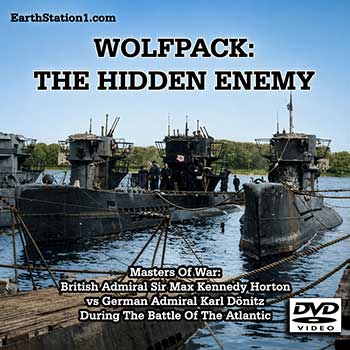
September 3: Merchant Navy Day (UK): --
Observed annually in recognition of their sacrifice in World War
I. King George V bestowed the title of Merchant Navy on British
merchant seafarers; the date of September 3 commemorates the
September 3, 1939 first torpedoing during World War II U.K.
merchant ship, "SS Athenia", sunk by Germany with a loss
of over 120 passengers and crew. On this day, the Red Ensign is
flown across the country to honor the brave men and women of the
Merchant Navy. Merchant Navy Day raises public awareness of the
country's ongoing dependence on merchant seafarers. They are often
regarded as the forgotten and invisible navy community. Modern-day
merchant seafarers are responsible for the U.K.'s imports,
including food and other daily products and goods. The Seafarers'
Charity (formerly Seafarers U.K.) started the Fly the Red Ensign
for the Merchant Navy Day campaign in 2015 to address 'sea
blindness,' providing an opportunity to pay tribute to merchant
seafarers. Merchant Navy Day became an official day of remembrance
in 2000. Since the title "The Merchant Navy" was coined
by King George V, several other nations have adopted the title
since. During wartime, the Merchant Navy became an essential part
of the support to carry servicemen and their supplies overseas.
Around 185,000 people, civilians, and volunteers served in the
Merchant Navy at the time. They were involved in the Battle of the
Atlantic, struggling to deliver food, fuel, equipment, and raw
materials. Over 14,000 people died in World War I, and more than
30,000 in World War II. The Merchant Navy kept Britain afloat
during both World Wars and is now responsible for delivering more
than 90% of the U.K.'s imports and exports. The Merchant Navy
consists of commercial and trading ships and their crews, and the
ships fly the Red Ensign. The day is an opportunity to honor the
brave men and women of the merchant seafarers for their service
and sacrifice. On Sale Until Midnight Tonight PT!
https://store.earthstation1.com/wolfpack-the-hidden-enemy-battle-of-the-atlantic-wwii-dvd-mp4-us4.html
Today's
EarthStation1.com 15% (Or More!) Off Commemorative Memorial Title:
The Mongol Hordes: Storm From The East TV Series DVD MP4 USB Drive
Today, September 3, 2026
September 3, 1260: The Mongols: The
Mongol Empire: Mongol Invasions And Conquests: The Mongol
Invasions Of The Levant: The Mamluk-Ilkhanid War: The Battle Of
Ain Jalut (The Battle Of Ayn Jalut) (Arabic: Ma'rakat 'Ayn Jalut):
-- An Egyptian Mamaluk army led by the Mamluk Sultan Saif ad-Din
Qutuz defeat the Mongols led by Hulagu Khan, a grandson of Genghis
Khan, at the Battle Of Ain Jalut in Palestine. The Battle Of Ain
Jalut took place in September 1260 between Muslim Mamluks
(Mamelukes, Mamalukes) and the Mongols in the southeastern
Galilee, in the Jezreel Valley, in the vicinity of Nazareth, not
far from the site of Zir'in. The battle marked the
south-westernmost extent of Mongol conquests, the point of maximum
expansion of the Mongol Empire and the first time a Mongol advance
had been decisively defeated. On Sale Until Midnight Tonight PT!
https://store.earthstation1.com/the-mongol-hordes-storm-from-the-east-tv-series-dvd-mp4-usb-driv4.html
Today's
EarthStation1.com 15% (Or More!) Off Commemorative Memorial Title:
New York City History Documentary Collection MP4 Video Download
DVD
Today, September 3, 2026
September 3, 1609: The Colonial History
Of The United States: Dutch Colonization Of The Americas: New
Netherland (Dutch: Nieuw Nederland, Latin: Novum Belgium): The
History Of New York City: The Expeditions Of Henry Hudson: The
Expedition Of 1609: The Voyage Of The Halve Maen (Dutch: "Half
Moon"): Henry Hudson's Discovery Of The Island Of Manhattan:
-- The island of Manhattan is discovered in a morning mist by
navigator Henry Hudson aboard the Dutch East India Company flyboat
Halve Maen. Hudson and his crew sailed into the river off the
Atlantic coast by chance. Strong head winds and storms forced them
to abandon the northeast voyage they had been assigned. Rather
than return to Holland with nothing to report, the crew voted to
look for the Northwest Passage, a legendary waterway that would
carry a ship all the way from the Atlantic to the Pacific Ocean.
They passed by the island we know today as Manhattan and sailed up
the river. Manhattan was first mapped during Manhattan Island
during this voyage, and he and his crew were the first westerners
to meet the native people living there. Manhattan was first
recorded in writing as Manna-hata, in the logbook of Robert Juet,
an officer on the voyage. The name Manhattan originated from the
Lenape's language, Munsee, manahahtaan (where manah- means
"gather", -aht- means "bow", and -aan is an
abstract element used to form verb stems). The Lenape word has
been translated as "the place where we get bows" or
"place for gathering the (wood to make) bows". According
to a Munsee tradition recorded by Albert Seqaqkind Anthony in the
19th century, the island was named so for a grove of hickory trees
at its southern end that was considered ideal for the making of
bows. Manhattan was historically part of the Lenapehoking
territory inhabited by the Munsee, Lenape, and Wappinger tribes.
There were several Lenape settlements in the area, including
Sapohanikan, Nechtanc, and Konaande Kongh, which were
interconnected by a series of trails. The primary trail on the
island, which would later become Broadway, ran from what is now
Inwood in the north to Battery Park in the south. There were
various sites for fishing and planting established by the Lenape
throughout Manhattan. After Henry Hudson and his crew made a brief
survey of the island and its natives, they continued on up the
river that would later bear his name, the Hudson River. On the
soil retaining wall of G. Thomas DiDomenico 16th Street Park in
Bayonne, New Jersey facing Newark Bay, there is a mural which
depicts the Halve Maen due to Bayonne's location across the Hudson
River from Battery Park, at the southern tip of Manhattan near the
mouth of the river, by which Henry Hudson sailed. #HenryHudson
#HalveMaen #Manhattan #TheCity #NewYork #NYC #NewYorkNewYork
#AgeOfExploration #AgeOfDiscovery #DutchEastIndiaCompany #Flyboats
#NewWorld #TheNewWorld #TheAmericas #Navigators #Navigation
#Exploration #AmericanHistory #USHistory #HistoryOfTheUS #MP4
#VideoDownload #DVD On Sale Until Midnight Tonight PT!
https://store.earthstation1.com/new-york-city-history-videos-3-dvd-se3.html
Today's
EarthStation1.com 15% (Or More!) Off Commemorative Memorial Title:
The World: A Television History Documentary Series DVD, Download,
USB
Today, September 3, 2026
September 3, 1650: The English Monarchy
(The Monarchy Of The Kingdom Of England): The Civil Wars (The
English Civil Wars): The Wars Of The Three Kingdoms (The British
Civil Wars): The Third English Civil War (1650-52) (The
Anglo-Scottish War): The 1650 Invasion Of Scotland: The Battle Of
Dunbar: -- In the first major battle of the 1650 Invasion Of
Scotland, the English New Model Army under Oliver Cromwell wins a
decisive victory, launching a pre-dawn surprise attack against a
poorly prepared Scottish army commanded by David Leslie near
Dunbar, Scotland. The Scottish cavalry broke and routed; the
Scottish infantry made a fighting retreat but suffered heavy
casualties. Between 300 and 500 Scots were killed, approximately
1,000 wounded and at least 6,000 were taken prisoner from an army
of 12,500 or fewer. After the battle, the Scottish government took
refuge in Stirling, where Leslie rallied what remained of his
army. The English captured Edinburgh and the strategically
important port of Leith. In the summer of 1651 the English crossed
the Firth of Forth to land a force in Fife; they defeated the
Scots at Inverkeithing and so threatened the northern Scottish
strongholds. Leslie and Charles II marched south in an
unsuccessful attempt to rally Royalist supporters in England. The
Scottish government, left in an untenable situation, surrendered
to Cromwell, who then followed the Scottish army south. At the
Battle of Worcester, precisely one year after the Battle of
Dunbar, Cromwell crushed the Scottish army, ending the war. The
1650 Invasion Of Scotland was triggered by Scotland's acceptance
of Charles II as king of Britain after the beheading of his
father, Charles I. on January 30, 1649. After Charles I's
execution, the English Rump Parliament established a republican
Commonwealth in England. When their erstwhile ally, Scotland,
recognised Charles II as king of all of Britain on 1 May 1650 and
began recruiting an army to support him, the English dispatched
the New Model Army, under the command of Cromwell. The army
crossed into Scotland on 22 July, with a force of over 16,000 men.
The Scots withdrew to Edinburgh, stripping the land of provisions.
Cromwell attempted to draw the Scots out into a set piece battle,
but they resisted, and Cromwell was unable to break through their
defensive line. At the end of August, with his army weakened
through disease and lack of food, Cromwell withdrew to the port of
Dunbar. The Scottish army followed and took up an unassailable
position on Doon Hill, overlooking the town. On 2 September, the
Scots advanced towards Dunbar and the English took up positions
outside the town. The English army was greatly weakened by
sickness and lack of food, while many of the Scots' most
experienced men had been dismissed in religious purges. The
Anglo-Scottish war (1650-1652), also known as the Third Civil War,
was the final conflict in The Wars Of The Three Kingdoms, a series
of armed conflicts and political machinations between shifting
alliances of religious and political factions in England, Scotland
and Ireland, fought by the supporters of King Charles II against
the supporters of the Rump Parliament. On Sale Until Midnight
Tonight PT!
https://store.earthstation1.com/the-world-a-television-history-4-dual-layer-dvds-all-26-sh426.html
Today's
EarthStation1.com 15% (Or More!) Off Commemorative Memorial Title:
The Western Tradition TV Series DVD, MP4 Video Download, USB Drive
Today, September 3, 2026
September 3, 1651: The English Monarchy
(The Monarchy Of The Kingdom Of England): The Civil Wars (The
English Civil Wars): The Wars Of The Three Kingdoms (The British
Civil Wars): The Third English Civil War (1650-52) (The
Anglo-Scottish War): The Battle Of Worcester: -- In and around the
city of Worcester, England, the Third English Civil War, and
thereby all the English Civil Wars, is brought to end when the
last major battle of the 1639 to 1653 Wars Of The Three Kingdoms
is fought between a Parliamentarian army of around 28,000 men
under Oliver Cromwell, who defeat the largely Scottish Royalist
force of 16,000 men led by Charles II of England. The Royalists
took up defensive positions in and around the city of Worcester.
The area of the battle was bisected by the River Severn, with the
River Teme forming an additional obstacle to the south-west of
Worcester. Cromwell divided his army into two main sections,
divided by the Severn, in order to attack from both the east and
south-west. There was fierce fighting at river crossing points and
two dangerous sorties by the Royalists against the eastern
Parliamentary force were beaten back. Following the storming of a
major redoubt to the east of the city, the Parliamentarians
entered Worcester and organised Royalist resistance collapsed.
Charles II was able to escape capture. On Sale Until Midnight
Tonight PT!
https://store.earthstation1.com/the-western-tradition-dvd-set-all-52-shows-13-d5213.html
Today's
EarthStation1.com 15% (Or More!) Off Commemorative Memorial Title:
Monarchy In The UK: British Royal History DVD, Download, USB Drive
Today, September 3, 2026
September 3, 1658: #DOTD: #RIP: Oliver
Cromwell, English general and politician, Lord Protector of the
Commonwealth of England, Scotland, and Ireland from 1653 until his
death, serving simultaneously as head of state and head of
government of this new republic (b. (April 1, 25 1599) #dies at
age 59 at The Palace Of Whitehall, City Of Westminster, England on
the anniversary of his great victories at Dunbar and Worcester.
The night of his death, a great storm swept England and all over
Europe. The most likely cause of death was septicaemia (blood
poisoning) following his urinary infection. He was buried with
great ceremony, with an elaborate funeral at Westminster Abbey
based on that of James I, his daughter Elizabeth also being buried
there. Cromwell was born into the middle gentry, albeit to a
family descended from the sister of King Henry VIII's minister
Thomas Cromwell. Little is known of the first 40 years of his life
as only four of his personal letters survive alongside a summary
of a speech he delivered in 1628. He became an Independent Puritan
after undergoing a religious conversion in the 1630s, taking a
generally tolerant view towards the many Protestant sects of his
period. He was an intensely religious man, a self-styled Puritan
Moses, and he fervently believed that God was guiding his
victories. He was elected Member of Parliament for Huntingdon in
1628 and for Cambridge in the Short (1640) and Long (1640-1649)
parliaments. He entered the English Civil War on the side of the
"Roundheads" or Parliamentarians. Nicknamed "Old
Ironsides", he demonstrated his ability as a commander and
was quickly promoted from leading a single cavalry troop to being
one of the principal commanders of the New Model Army, playing an
important role under General Sir Thomas Fairfax in the defeat of
the royalist forces. Cromwell was one of the signatories of King
Charles I's death warrant in 1649, and he dominated the
short-lived Commonwealth of England as a member of the Rump
Parliament (1649-1653). He was selected to take command of the
English campaign in Ireland in 1649-1650. Cromwell's forces
defeated the Confederate and Royalist coalition in Ireland and
occupied the country, bringing to an end the Irish Confederate
Wars. During this period, a series of Penal Laws were passed
against Roman Catholics (a significant minority in England and
Scotland but the vast majority in Ireland), and a substantial
amount of their land was confiscated. Cromwell also led a campaign
against the Scottish army between 1650 and 1651. On 20 April 1653,
he dismissed the Rump Parliament by force, setting up a
short-lived nominated assembly known as Barebone's Parliament,
before being invited by his fellow leaders to rule as Lord
Protector of England (which included Wales at the time), Scotland
and Ireland from 16 December 1653. As a ruler, he executed an
aggressive and effective foreign policy. He died from natural
causes in 1658 and was buried in Westminster Abbey. His legacy
passed to his son Richard, who was overthrown by the army in 1659,
after which monarchy was re-established and King Charles II, who
was living in exile, was recalled. Charles' new parliament ordered
the disinterment of Cromwell's body from Westminster Abbey and the
disinterment of other regicides John Bradshaw and Henry Ireton,
for a posthumous execution at Tyburn. After hanging "from
morning till four in the afternoon", the bodies were cut down
and the heads placed on a 20-foot spike above Westminster Hall
(the location of the trial of Charles I). In 1685, a storm broke
the pole upon which Cromwell's head stood, throwing it to the
ground (although other sources put the date anywhere between 1672
and 1703), after which it was in the hands of private collectors
and museum owners until 25 March 1960, when it was buried at
Sidney Sussex College in Cambridge. The symbolic value of the head
changed over time. While it was spiked on a pole above the London
skyline, it gave a potent warning to spectators. In the 18th
century, the head became a curiosity and a relic. The head has
been admired, reviled, and dismissed as a fake throughout the
centuries. After Thomas Carlyle dismissed the head as "fraudulent
moonshine", and after the emergence of a rival claimant to
the true head of Oliver Cromwell, scientific and archaeological
analysis was carried out to prove the identity. Inconclusive tests
culminated in a detailed scientific study by Karl Pearson and
Geoffrey Morant, which concluded, based on a study of the head and
other evidence, that there was a moral certainty that the head
belonged to Oliver Cromwell. Cromwell is one of the most
controversial figures in the history of the British Isles,
considered a regicidal dictator by historians such as David Sharp,
a military dictator by Winston Churchill, but a hero of liberty by
John Milton, Thomas Carlyle, and Samuel Rawson Gardiner, and a
class revolutionary by Leon Trotsky. In a 2002 BBC poll in
Britain, Cromwell, sponsored by military historian Richard Holmes,
was selected as one of the ten greatest Britons of all time.
However, his tolerance of Protestant sects did not extend to
Catholics: his measures against them in Ireland have been
characterised as genocidal or near-genocidal, and in Ireland his
record is harshly criticised. On Sale Until Midnight Tonight PT!
https://store.earthstation1.com/monarchy-in-the-uk-british-royal-history-mp4-video-download-dvd-set.html
Today's
EarthStation1.com 15% (Or More!) Off Commemorative Memorial Title:
American Revolutionary War Documentaries DVD, Download, USB Drive
Today, September 3, 2026
September 3, 1783: The Age Of
Enlightenment (The Enlightenment, The Age Of Reason): The Age Of
Revolution: The Atlantic Revolutions: The American Enlightenment:
The American Revolution: The American Revolutionary War: The
Treaty Of Paris (1783):The Aftermath Of The American Revolution:
The Treaty Of Paris (1783): -- The American Revolutionary War ends
with the signing of the Treaty Of Paris by the United States and
the Kingdom of Great Britain. The treaty set the boundaries
between the British Empire in North America and the United States
and included fishing rights and restoration of property and
prisoners of war. This treaty and the separate peace treaties
between Great Britain and the nations that supported the American
cause (France, Spain, and the Dutch Republic) are known
collectively as the Peace of Paris. Only Article 1 of the treaty,
which acknowledges the United States' existence as free,
sovereign, and independent states, remains in force. On Sale Until
Midnight Tonight PT!
https://store.earthstation1.com/american-revolutionary-war-dvd-documentaries.html
Today's
EarthStation1.com 15% (Or More!) Off Commemorative Memorial Title:
World War II With Walter Cronkite TV Series DVD, Download, USB
Drive
Today, September 3, 2026
September 3, 1939: The European Civil
War: World War II: The Second European War (The European Theater
Of World War II): The Invasion Of Poland (The September Campaign,
The Polish Campaign, The War Of Poland Of 1939, The Polish
Defensive War Of 1939): The Allies Of World War II: The French
Declaration Of War On Germany (1939): The United Kingdom's
Declaration Of War On Germany (1939): New Zealand's Declaration Of
War On Germany (1939): Australia's Declaration Of War On Germany
(1939): -- In response to the September 1, 1939 German Invasion Of
Poland, first members of The Allies Of World War II -- France, The
United Kingdom, New Zealand and Australia -- are formed against
Nazi Germany. Many more countries would join their ranks (as would
other countries to Nazi Germany's ranks as well) as what was to
become known as World War II, or the Second World War, would
continue on for six more years of the bloodiest fighting in world
history. On Sale Until Midnight Tonight PT!
https://store.earthstation1.com/world-war-ii-with-walter-cronkite-dvd-set-all-8-discsht8.html
Today's
EarthStation1.com 15% (Or More!) Off Commemorative Memorial Title:
World War II: The War Years 17 Part TV Series MP4 Video Download
DVD
Today, September 3, 2026
September 3, 1939: The European Civil
War: World War II: The Second European War (The European Theater
Of World War II): The Battle Of The Atlantic: -- On same day that
The Allies Of World War II are formed against Nazi Germany in
response to the September 1, 1939 German Invasion Of Poland, the
United Kingdom and France begin a naval blockade of Germany,
marking the beginning of The Battle Of The Atlantic. The French
blockade would last until France capitulated on May 10, 1940,
which the British blockade would last until the end of the war. On
Sale Until Midnight Tonight PT!
https://store.earthstation1.com/world-war-ii-the-war-years-17-part-tv-series-mp4-video-download-174.html
Today's
EarthStation1.com 15% (Or More!) Off Commemorative Memorial Title:
WWII: A History In Pictures JPGs + WWII Art Vid DVD-ROM, Download,
USB
Today, September 3, 2026
September 3, 1939: The European Civil
War: World War II: The Second European War (The European Theater
Of World War II): The Invasion Of Poland (The September Campaign,
The Polish Campaign, The War Of Poland Of 1939, The Polish
Defensive War Of 1939): The Allies Of World War II: The Canadian
Declaration Of War On Germany (1939): -- Canadian Prime Minister
William Lyon Mackenzie King announces the recommendation for a
declaration of war against Germany in a radio speech broadcast
from Ottawa. The matter was then debated in Parliament, though
declaration of war is a matter of the royal prerogative and does
not require parliamentary approval. Seven days later, on September
10, 1939, George VI signed a Canadian Order-In-Council,
legislation formally made in the name of the monarch by and with
the advice and consent of the Privy Council (King-In-Council),
declaring war on Nazi Germany and thereby joining the Allies:
Poland, France, the United Kingdom, New Zealand and Australia,
seven days after the United Kingdom and France had also entered a
state of war with Nazi Germany. The royal proclamation of the
Canadian Declaration Of War On Germany was then published in the
Canadian newspaper of record, The Canada Gazette. On Sale Until
Midnight Tonight PT!
https://store.earthstation1.com/world-war-ii-jpg-cd-a-history-in-pictures-wwii-photos.html
Today's
EarthStation1.com 15% (Or More!) Off Commemorative Memorial Title:
Crusade In Europe WWII TV Series DVD, Video Download, USB Flash
Drive
Today, September 3, 2026
September 3, 1943: The European Civil
War: World War II: The Second European War (The European Theater
Of World War II): The Mediterranean And Middle East Theater Of
World War II (The Mediterranean Theater Of War) The Italian
Campaign Of World War II (The Liberation Of Italy): The Allied
Invasion Of Italy: Operation Baytown: -- British amphibious forces
under the command of Lieutenant-General Miles C. Dempsey's British
XIII Corps, along with the 1st Canadian Infantry Division
(Major-General Guy Simonds) and the British 5th Infantry Division
(Major-General Gerard C. Bucknall) cross the Straits Of Messina
and land at Reggio di Calabria on the mainland of Italy, beginning
The Allied Invasion Of Italy. XIII Corps was part of the British
Eighth Army, commanded by General Sir Bernard Montgomery. XIII
Corps crossed the Straits of Messina from Sicily to Reggio di
Calabria, covered by a heavy artillery barrage from Sicily and air
cover from the Desert Air Force operating from Sicilian airfields.
The intent was to tie down German forces in the area and gain an
Allied foothold at the 'toe' of Italy. Montgomery had objected to
Baytown as ineffective, preferring to prioritise Operation
Avalanche, the Allied landings near the port of Salerno, executed
on September 9, but followed orders and prepared to carry it out
anyway. However, when essential landing craft and naval resources
were diverted to Avalanche he complained again. German commander
Generalfeldmarschall Albert Kesselring and his staff did not
believe the Calabria landing was the main Allied attack, which
they expected at Salerno, or possibly north of Naples, or even
near Rome. He therefore ordered General der Panzertruppe Traugott
Herr's LXXVI Panzer Corps, part of the German 10th Army under
Generaloberst Heinrich von Vietinghoff, to pull back from
engagement with the Eighth Army and delay them by the demolition
of bridges and other infrastructure. A single German regiment was
left at the southernmost tip of Italy to support the Italian 211th
Coastal Division and 185th Paratroopers Regiment "Folgore".
Montgomery's objections were proved correct: German troops refused
battle, and the Eighth Army tied down none of them. The main
obstacle to the Allied advance was the terrain and German
demolitions. Opposition to the landings was very light, because
the few German troops in the area rapidly withdrew northward.
Italian troops on the coast, belonging to the coastal divisions,
were poorly equipped, demoralized by the political situation and
the massive Allied bombardment; they offered no resistance to the
landing. An exception was the 185th Paratroopers Regiment "Nembo"
of the 184th Paratroopers Division "Nembo", which
provided more determined resistance on the Aspromonte massif, but
was eventually overcome on 8 September 1943. During the fighting,
the Canadians killed six and took 57 prisoners, suffering two
officers killed. Operation Baytown was followed by Operation
Slapstick, the code name for a British landing from the sea at the
Italian port of Taranto, with the British 1st Airborne Division
(Major-General George Hopkinson), and Operation Avalanche, the
main landings at Salerno by elements of Lieutenant General Mark
Clark's U.S. Fifth Army. Both operations took place on September
9, the day after the official announcement of the Italian
surrender; the surrender had been agreed upon on September 3, but
was not publicly announced until September 8, and it had no direct
effect on Operation Baytown. On Sale Until Midnight Tonight PT!
https://store.earthstation1.com/crusade-in-europe-2-dual-layer-dvds-tv-series-eisenhowe2.html
Today's
EarthStation1.com 15% (Or More!) Off Commemorative Memorial Title:
Fascist Legacy: WWII Italian War Criminals TV Series DVD Download
USB
Today, September 3, 2026
September 3, 1943: The European Civil
War: World War II: The Second European War (The European Theater
Of World War II): The Mediterranean And Middle East Theater Of
World War II (The Mediterranean Theater Of War) The Italian
Campaign Of World War II (The Liberation Of Italy): The Allied
Invasion Of Italy: The Armistice Of Cassibile (Italian: Armistizio
Di Cassibile) (The Italian Instrument Of Surrender): -- On the
same day that The Allied Invasion Of Italy began with Operation
Baytown, U.S. General Walter Bedell Smith and Italian Brigade
General Giuseppe Castellano sign the Armistice Of Cassibile at a
conference of generals from both sides in an Allied military camp
at Cassibile, in Sicily, resulting in an armistice between The
Kingdom Of Italy and both the United States and the United
Kingdom, ending Italy's participation in military operations
against the Allies Of World War II: The agreement was made public
on September 8, five days later. The armistice was approved by
both Italian King Victor Emmanuel III and Marshal Badoglio, who
was the Prime Minister of Italy at the time. Germany responded
immediatlely by attacking Italian forces in Italy from September
8-19, and in southern France and the Balkans and freeing Benito
Mussolini on September 12. The Italian forces were quickly
defeated, and most of Italy was occupied by German troops, who
established a puppet state, the Italian Social Republic. The king,
the Italian government, and most of the Navy escaped to
territories occupied by the Allies. On Sale Until Midnight Tonight
PT!
https://store.earthstation1.com/fascist-legacy-italian-war-criminals-of-wwii-dvd-both-tv-shows.html
Today's
EarthStation1.com 15% (Or More!) Off Commemorative Memorial Title:
Cold War Propaganda Films Collection MP4 Video Download DVD
Today, September 3, 2026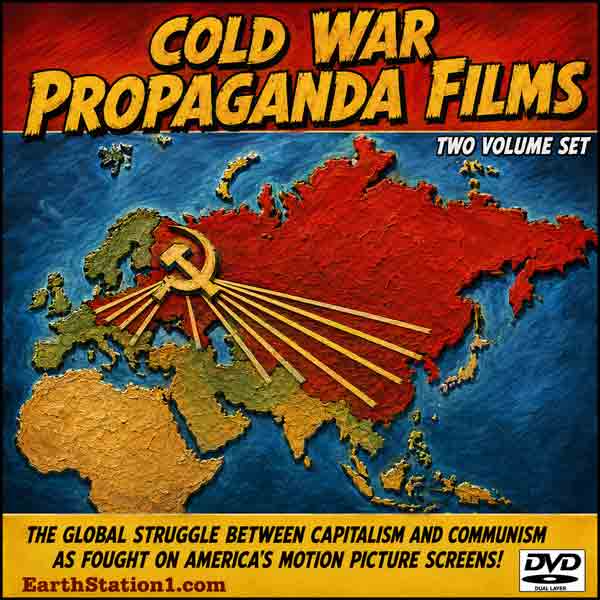
September 3, 1954: China: The History Of
China: The Aftermath Of World War II: The Cold War: The Cold War
(1953-1962): The Cold War In Asia: The Cross-Strait Relations
(Mainland-Taiwan Relations, China-Taiwan Relations, Taiwan-China
Relations, Taiwan-China Relations): The Cross-Strait Crisis (The
Taiwan Strait Crisis): The Second Taiwan Strait Crisis (The 1958
Taiwan Strait Crisis): -- The First Taiwan Strait Crisis begins
when The People's Liberation Army begins a heavy bombardment of
Republic Of China-controlled islands of Quemoy (modern Kinmen), a
group of twelve islands which comprises Kinmen County and includes
the islands of Kinmen, Lieyu, Dadan and Erdan, sparking The First
Taiwan Strait Crisis (September 3, 1954 - May 1, 1955). Shelling
was subsequently extended to the Matsu and Tachen (Dachen)
islands. In response, the United States and the Republic Of China
(ROC) agreed to the Sino-American Mutual Defense Treaty in
December 1954. In January 1955, The People's Republic Of China
(PRC) managed to seize the Yijiangshan Islands, forcing the ROC to
abandon the Tachen Islands. Later in January, the Formosa
Resolution was approved by both houses of the U.S. Congress,
authorizing President Dwight D. Eisenhower to defend the ROC and
its possessions. The navies of the the United States and the ROC
then joined forces to evacuate ROC military personnel and
civilians from the Tachen Islands to Taiwan. Though the Tachen
Islands changed hands during the crisis, American news reports
focused almost exclusively on the Kinmen and Matsu islands, which
were the sites of frequent artillery duels. The crisis
de-escalated in April 1955 after Premier Zhou Enlai articulated
the PRC's intention to negotiate with the United States at the
Bandung Conference, and in May 1955 the People's Liberation Army
ceased shelling Kinmen and Matsu. Ambassadorial-level discussions
between China and the U.S. began in Geneva in August 1955. The
fundamental issues of the conflict remained unresolved, which led
to a new crisis three years later. The Chinese Civil War had
receded in scale in 1949, with Chiang Kai-shek's Kuomintang (KMT)
government and 1.3 million supporters abandoning the Chinese
mainland and relocating the national government to the island of
Taiwan (also known as Formosa). While hostilities in western and
southwestern China continued, the territory under the jurisdiction
of the Republic Of China was effectively reduced to Taiwan, the
Pescadores, and several island groups along the coast of
southeastern China. Hainan island fell to the Communists in April
1950 and the Choushan islands were evacuated by the Nationalists
in May 1950, even before the First Taiwan Strait Crisis. The Matsu
and Kinmen island groups, situated in the Taiwan Strait just off
the coast of the Chinese mainland, were the Nationalists' first
line of defense against the Communist Party of China and were
heavily fortified by Chiang. The islands off the shore of Zhejiang
province were seen as a foothold to recover the mainland and
housed the reduced provincial government of Chiang's native
province. On Sale Until Midnight Tonight PT!
https://store.earthstation1.com/cold-war-propaganda-films-dvd-set-2-disc2.html
Today's
EarthStation1.com 15% (Or More!) Off Commemorative Memorial Title:
The Fabulous Sixties with Peter Jennings TV Docuseries MP4 Or DVD
Set
Today, September 3, 2026
September 3, 1965: The Aftermath Of World
War II: The Cold War: The Dominican Civil War (April 24, 1965 -
September 3, 1965) (Spanish: Guerra Civil Dominicana), (The April
Revolution (Spanish: Revolucion De Abril): The United States
Occupation Of The Dominican Republic (April 28, 1965 - September
21, 1966): Operation Power Pack (United States Intervention In The
Dominican Civil War): -- The Dominican Civil War comes to an end
after some four months. On April 28, 1965, allegations of
communist support for the constitutionalist rebels against the
militarily installed loyalist dictator president Donald Reid
Cabral resulted in a United States intervention in the conflict,
codenamed Operation Power Pack, to support the loyalist cause. In
the early morning of April 27, US diplomats in Santo Domingo
initiated preparations for evacuating 3,500 U.S. citizens by
sending a group of 1,176 foreign civilians who had assembled in
Hotel Embajador for airlifting to the Bajos de Haina naval
facility, where they boarded USS Ruchamkin and USS Wood County, as
well as the helicopters of HMM-264, which evacuated them from the
island to USS Boxer and USS Raleigh. Later that day, 1,500
Loyalist troops, supported by armored cars and tanks, marched from
the San Isidro Air Base, captured Duarte Bridge, and took position
on the west bank of the Ozama River. A second force, consisting of
700 soldiers, left San Cristobal and attacked the western suburbs
of Santo Domingo. Wessin y Wessin ordered his armored units to
cross the Duarte Bridge into Santo Domingo's center. However, the
tanks quickly became bogged down in fierce combat within the
narrow streets; armed civilians destroyed them. Unable to advance,
the Loyalists retreated to San Isidro. The battle resulted in
hundreds of casualties. Rebels overran the Fortaleza Ozama police
headquarters and took 700 prisoners. On April 28, armed civilians
attacked the Villa Consuelo police station and executed all of the
police officers who survived the initial skirmish. One US Marine
battalion landed in Haina and later moved to Hotel Embajador,
where it provided assistance in the upcoming airlifts. During the
night, 684 civilians were airlifted to USS Boxer. One US Marine
was killed by a rebel sniper during the operation. On April 29,
the US ambassador to the Dominican Republic, William Tapley
Bennett, who had sent numerous reports to US President Lyndon
Johnson, reported that the situation had reached life-threatening
proportions for US citizens and that the rebels were Communists.
Bennett stressed that the US had to act immediately, as the
creation of an international coalition would be time-consuming.
Contrary to the suggestions of his advisers, Johnson authorized
the transformation of evacuation operations into a large-scale
military intervention through Operation Power Pack, which was
aimed to prevent the development of what he saw as a second Cuban
Revolution. It was the first overt U.S. military intervention in
Latin America in more than 30 years, although it came on the heels
of U.S.-backed coups in Guatemala and Brazil, as well as ongoing
covert operations in Cuba. At 2:16 a.m. on April 30, 1965, the 3rd
Brigade of the 82nd Airborne Division landed at the San Isidro Air
Base and started the US military intervention in the conflict.
During the next couple of hours, two brigade combat teams and
heavy equipment were also dispatched. At sunrise the 1st
Battalion, 508th Infantry Regiment moved up the San Isidoro
highway under the cover of F-4 Phantom jets flying from Puerto
Rico, securing a position east of the Duarte bridge. More units of
the 82nd Airborne landed and secured the entire east bank of the
Ozama River. Rebel positions across the river were destroyed by
105 mm howitzers. U.S. soldiers crossed the bridge and occupied a
six-block area on the western side of the Duarte Bridge, but
suffered casualties from sniper fire. The 1st Battalion 505th
Infantry Regiment remained at the airbase and sent out patrols to
the perimeter. A force of 1,700 Marines of the 6th Marine
Expeditionary Unit occupied an area containing a number of foreign
embassies. The locale was proclaimed an International Security
Zone by the Organization of American States (OAS). Earlier in the
day, the OAS also issued a resolution calling the combatants to
end all hostilities. At 4:30 p.m., representatives of the
loyalists, the rebels, and the US military signed a ceasefire that
was to take effect at 11:45 p.m. That timing favored the
demoralized Loyalists, who had lost control of Ciudad Colonial.
The Dominican Civil War took place in Santo Domingo, Dominican
Republic. It started when civilian and military supporters of the
overthrown democratically elected president Juan Bosch ousted the
militarily installed president Donald Reid Cabral from office. The
second coup prompted General Elias Wessin y Wessin to organize
elements of the military loyal to the dictator Reid ("loyalists"),
initiating an armed campaign against the "constitutionalist"
rebels. It started when civilian and military supporters of former
President Juan Bosch overthrew acting President Donald Reid
Cabral. The coup prompted General Elias Wessin y Wessin to
organise elements of the military loyal to President Reid, known
as loyalists, initiating an armed campaign against the so-called
constitutionalist rebels. Allegations of foreign support for the
rebels led to a United States intervention in the conflict, which
later transformed into an Organization of American States
occupation of the country. The rebels were holed up inside Santo
Domingo and refused to surrender. They were continuously bombarded
by the Dominican Air Force who aimed their bombs at the television
stations and radio stations, particularly Radio Santo Domingo, and
the National Palace. Americans and Dominicans skirmished several
times but fought only one battle, which occurred on June 15-16,
1965, in the Dominican-held Ciudad Nueva area of the city, where
the 82nd Airborne Division lost 5 KIA, 31 WIA, and 3 DOW, while
inflicting casualties of 67 KIA and 165 WIA on the Dominican
forces. Once Loyalist victory was achieved, Operation Power Pack
transformed from a United States military occupation into an
Organization of American States occupation of the country by a few
thousand Latin American troops of The Inter-American Peace Force,
who remained as peacekeepers in the Dominican Republic until June
1966 when Joaquin Balaguer was elected president. Later in the
same year, all remaining foreign troops departed from the country.
The conflict ultimately resulted in around 6,000 Dominican
casualties and 350 U.S. casualties. On Sale Until Midnight Tonight
PT!
https://store.earthstation1.com/decades-the-1960s-dvd-set-peter-jennings-tv-series-3-19603.html
Today's
EarthStation1.com 15% (Or More!) Off Commemorative Memorial Title:
The Road To Brown: Battle Against Plessy v Ferguson DVD Download
USB
Today, September 3, 2026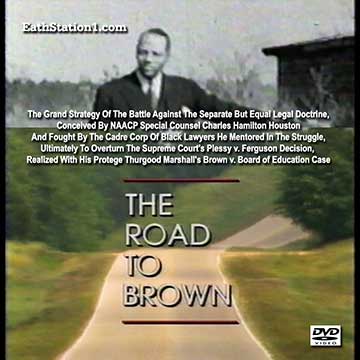
September 3, 1895: #BOTD: #HBD! Charles
Hamilton Houston, seminal African American lawyer, Dean of Howard
University Law School, and NAACP first special counsel, or
Litigation Director (d. April 22, 1950) is #born in Washington,
D.C.. A graduate of Amherst College and Harvard Law School,
Houston played a significant role in dismantling Jim Crow laws,
especially attacking segregation in schools and racial housing
covenants. He earned the title "The Man Who Killed Jim Crow".
Houston is also well known for having trained and mentored a
generation of black attorneys, including Thurgood Marshall, future
director of the NAACP's Legal Defense Fund and appointed as
Supreme Court Justice. He recruited young lawyers to work on the
NAACP's litigation campaigns, building connections between the law
schools of Howard and Harvard universities. Charles Hamilton
Houston died of a heart attack in the city of his birth of
Washington, D.C at the age of 54. He is buried at Lincoln Memorial
Cemetery in Suitland, Maryland. On Sale Until Midnight Tonight PT!
https://store.earthstation1.com/the-road-to-brown-battle-against-plessy-v-ferguson-dvd-download-usb.html
Today's
EarthStation1.com 15% (Or More!) Off Commemorative Memorial Title:
Clive James' Fame In The 20th Century TV Series DVD Set MP4 USB
Drive
Today, September 3, 2026
September 3, 1935: The History Of The
Automobile: Aero-Engined Cars: Land Speed Records (LSRs) (Absolute
Land Speed Records): The Blue Bird (The Campbell-Railton Blue
Bird): -- Malcolm Campbell sets his final land speed record at the
Bonneville Salt Flats in Utah when he reaches a speed of 304.331
miles per hour in his custom-built race car named Blue Bird
(Campbell-Railton Blue Bird precisely), becoming the first person
to drive an automobile over 300 mph. Major Sir Malcolm Campbell
MBE (March 11, 1885 - December 31, 1948) was a British racing
motorist and motoring journalist who gained the world speed record
on land and on water at various times, using vehicles called Blue
Bird, including a 1921 Grand Prix Sunbeam. His son, Donald
Campbell, carried on the family tradition by holding both land
speed and water speed records. Blue Bird or Bluebird is the name
of various cars and boats used by Sir Malcolm Campbell, his son
Donald and other family members to set land and water speed
records. On Sale Until Midnight Tonight PT!
https://store.earthstation1.com/clive-james39-fame-in-the-20th-century-tv-series-dvd-set-mp4-usb-39204.html
Today's
EarthStation1.com 15% (Or More!) Off Commemorative Memorial Title:
Lighter Than Air: Airships & Inflatable Planes DVD, MP4, USB
Drive
Today, September 3, 2026
September 3, 1925: #DOTD: #RIP: USS
Shenandoah (ZR-1), the United States' first American-built rigid
airship, is destroyed on her 57th flight in a squall line of
thunderstorms over Noble County, Ohio. Fourteen of her 42-man crew
perished, including her commander, Zachary Lansdowne. USS
Shenandoah was the first of four United States Navy rigid
airships. It was constructed during 1922-23 at Lakehurst Naval Air
Station, and first flew in September 1923. It developed the U.S.
Navy's experience with rigid airships, and made the first crossing
of North America by airship. On Sale Until Midnight Tonight PT!
https://store.earthstation1.com/lighter-than-air-airships-inflatable-planes-dvd-mp3-us3.html
Today's
EarthStation1.com 15% (Or More!) Off Commemorative Memorial Title:
British Intelligence 1940 Boris Karloff Margaret Lindsay DVD MP4
USB
Today, September 3, 2026
September 3, 1916: Military Aviation
Firsts: The European Civil War: World War I: The First European
War (The European Theater Of World War I): The Western Front Of
World War I: Aviation: Military Aviation: Air Warfare Of World War
I: Strategic Bombing During World War I: German Strategic Bombing
During World War I: -- Leefe Robinson (July 14, 1895 - December
31, 1918), British pilot of the Royal Flying Corps (RFC), becomes
the first airplane pilot to shoot down an airship when on the
night of September 2/3, 1916 while flying a converted Royal
Aircraft Factory B.E.2c night fighter he downs the wooden-frame
German airship Schutte-Lanz SL 11 (though at the time and for many
years after it was misidentified as the Zeppelin L 21) over
Cuffley, north of London, and crashes in flames behind the Plough
Inn of Cuffley, killing its Commander Hauptmann Wilhelm Schramm
and his 15-man crew, the first German airship to be shot down on
British soil. The propaganda value of this success was enormous to
the British Government, as it indicated that the German airship
threat could be countered. For this action, he was awarded the
Victoria Cross (VC), the highest award for gallantry in the face
of the enemy that can be awarded to British and Commonwealth
forces. He was the first person to be awarded the VC for action
inside of the United Kingdom. His action marked a turning point in
the war against the airship menace, and caused the German airship
bombing campaign to falter. In the three months afterwards, five
more airships were shot down using the combat techniques he had
proven. On Sale Until Midnight Tonight PT!
https://store.earthstation1.com/british-intelligence-1940-boris-karloff-wwi-spy-film-dvd-mp19404.html
Today's
EarthStation1.com 15% (Or More!) Off Commemorative Memorial Title:
War Props: The Messerschmitt Bf 109 DVD, MP4 Download, USB Flash
Drive
Today, September 3, 2026
September 3, 1942: The European Civil
War: World War II: The Second European War (The European Theater
Of World War II): The Eastern Front Of World War II: The Great
Patriotic War (The German-Soviet War): Aviation: Military
Aviation: Air Warfare Of World War II: -- Gunther Rall
(Anglicized: Guenther Rall), highly decorated German military
aviator, fighter ace, officer and general and pilot, third most
successful fighter pilot in aviation history whose military career
spanned nearly forty years (March 10, 1918 - October 4, 2009) is
awarded the Ritterkreuz (Knights Cross), the Knight's Cross Of The
Iron Cross for 65 enemy aircraft shot down. Gunther Rall was born
in Gaggenau, the German Empire, and grew up in the Weimar
Republic. His fighter successes were exceeded only by Gerhard
Barkhorn ("Gerd"), who ranks second, and Erich Hartmann
("The Black Devil", "Bubi"), who ranks first.
During World War II Rall was credited with the destruction of 275
enemy aircraft in 621 combat missions. He was shot down five times
and wounded on three occasions. Rall claimed all of his victories
in a Messerschmitt Bf 109, though he also flew the Focke-Wulf Fw
190 operationally. All but three of his claims were against Soviet
opposition. In 1933 the Nazi Party seized power and Rall, deciding
upon a military career, joined the Wehrmacht (Nazi German Armed
Forces) in 1936 to train as an infantry soldier. Rall transferred
to the Luftwaffe soon after and he qualified as a fighter pilot in
1938. In September 1939 World War II began with the German
Invasion Of Poland. Rall was assigned to Jagdgeschwader 52 (JG
52-Fighter Wing 52) and flew combat patrols in the Phoney War
period on the Western Front. Rall flew combat missions in the
Battle Of France and Battle Of Britain, claiming one enemy
aircraft destroyed in May 1940. Rall's wing sustained heavy
casualties, and as a result the then-22 year old was appointed to
Staffelkapitan (Squadron Leader). He then served in the Balkans
Campaign in April and May 1941 without success. In June 1941, JG
52 moved to the Eastern Front, where it remained from Operation
Barbarossa until the end of the war. Rall claimed his first
successes in the air defence of Romania. In November 1941, he was
shot down, wounded and invalidated from flying for a year. At this
time Rall had claimed 36 aerial victories. His achievements earned
him the German Cross in Gold in December 1941. Rall returned in
August 1942 and was awarded the Knight's Cross on September 3,
1942 for 65 enemy aircraft shot down. By October 22 Rall had
claimed 100 and received the Knight's Cross with Oak Leaves. He
reached 200 in late August 1943. On September 12, 1943 he was
awarded the Knight's Cross of the Iron Cross with Oak Leaves and
Swords, the second highest military award in the Third Reich at
the time of the presentation. By the end of 1943 Rall had achieved
over 250, the second flier to do so after Nowotny did in October
1943. In April 1944 Rall left JG 52 and the Eastern Front. He was
given command of II./Jagdgeschwader 11 and served in the Defence
of the Reich where he was wounded for a third time. In November
1944 Rall was appointed as an instructor and flew captured Allied
fighter aircraft in order to prepare instruction notes on their
performance to German fighter pilots. Rall ended the war with an
unsuccessful stint commanding Jagdgeschwader 300 near Salzburg,
Austria, where he surrendered in May 1945. After World War II,
Rall joined the West German Air Force in 1956, served as Inspector
of the Air Force from 1971 to 1974, and as the German
representative to the NATO Military Committee until 1975. After
his retirement Rall became a consultant. Among his post-war
achievements was the presentation of the Order of Merit of the
Federal Republic of Germany, awarded to him for his post-1945
service. Gunther Rall died at his home in Bad Reichenhall after
suffering a heart attack two days earlier. On Sale Until Midnight
Tonight PT!
https://store.earthstation1.com/war-props-the-messerschmitt-bf-109-dvd-mp4-download1094.html
Today's
EarthStation1.com 15% (Or More!) Off Commemorative Memorial Title:
Frederick Douglass Biography Documentary DVD MP4 Download USB
Drive
Today, September 3, 2026
September 3, 1838: The American Civil War
(The Civil War, The War Between The States): Slavery In The United
States: The Escape From Slavery Of Frederick Douglass: --
Frederick Douglass, African American social reformer,
abolitionist, orator, writer, and statesman (born Frederick
Augustus Washington Bailey; February 1818 [?] - February 20, 1895)
escapes from his servitude in slavery under his slave owner Thomas
Auld in Maryland when he boards a northbound train of the
Philadelphia, Wilmington and Baltimore Railroad in Baltimore.
Douglass reached Havre de Grace, Maryland, in Harford County, in
the northeast corner of the state, along the southwest shore of
the Susquehanna River, which flowed into the Chesapeake Bay.
Although this placed him only some 20 miles (32 km) from the
Maryland-Pennsylvania state line, it was easier to continue by
rail through Delaware, another slave state. Dressed in a sailor's
uniform provided to him by his future wife Anna Murray Douglass,
who also gave him part of her savings to cover his travel costs,
he carried identification papers and protection papers that he had
obtained from a free black seaman. Douglass crossed the wide
Susquehanna River by the railroad's steam-ferry at Havre de Grace
to Perryville on the opposite shore, in Cecil County, then
continued by train across the state line to Wilmington, Delaware,
a large port at the head of the Delaware Bay. From there, because
the rail line was not yet completed, he went by steamboat along
the Delaware River further northeast to the "Quaker City"
of Philadelphia, Pennsylvania, an anti-slavery stronghold. He
continued to the safe house of abolitionist David Ruggles in New
York City. His entire journey to freedom took less than 24 hours.
Douglass later wrote of his arrival in New York City: "I have
often been asked, how I felt when first I found myself on free
soil. And my readers may share the same curiosity. There is
scarcely anything in my experience about which I could not give a
more satisfactory answer. A new world had opened upon me. If life
is more than breath, and the 'quick round of blood', I lived more
in one day than in a year of my slave life. It was a time of
joyous excitement which words can but tamely describe. In a letter
written to a friend soon after reaching New York, I said: 'I felt
as one might feel upon escape from a den of hungry lions.' Anguish
and grief, like darkness and rain, may be depicted; but gladness
and joy, like the rainbow, defy the skill of pen or pencil."
Once Douglass had arrived, he sent for Murray to follow him north
to New York. She brought the basics for them to set up a home.
They were married just eleven days later, on September 15, 1838,
by a black Presbyterian minister. At first they adopted Johnson as
their married name, to divert attention. Frederick Douglass went
on to become a national leader of the abolitionist movement in
Massachusetts and New York, gaining note for his dazzling oratory
and incisive antislavery writings. In his time, he was described
by abolitionists as a living counter-example to slaveholders'
arguments that slaves lacked the intellectual capacity to function
as independent American citizens. Northerners at the time found it
hard to believe that such a great orator had once been a slave.
Douglass also actively supported women' suffrage, and held several
public offices. Without his approval, Douglass became the first
African American nominated for Vice President of the United States
as the running mate and Vice Presidential nominee of Victoria
Woodhull, on the Equal Rights Party ticket. Douglass was a firm
believer in the equality of all peoples, whether black, female,
Native American, or recent immigrant. He was also a believer in
dialogue and in making alliances across racial and ideological
divides, and in the liberal values of the U.S. Constitution. When
radical abolitionists, under the motto "No Union With
Slaveholders", criticized Douglass' willingness to dialogue
with slave owners, he famously replied: "I would unite with
anybody to do right and with nobody to do wrong." On Sale
Until Midnight Tonight PT!
https://store.earthstation1.com/frederick-douglass-biography-documentary-dvd-mp4-download-usb-driv4.html
Today's
EarthStation1.com 15% (Or More!) Off Commemorative Memorial Title:
Rhythm And Blues Revue (1955) DVD, MP4 Video Download, USB Flash
Drive
Today, September 3, 2026
September 3, 1902: #BOTD: #HBD! Mantan
Moreland, African American actor and comedian most popular in the
1930s and 1940s and who starred in numerous films, who was nearly
a member of The Three Stooges (d. September 28, 1973) is #born in
Monroe, Louisiana, to Frank, an old-time Dixieland bandleader, and
Marcella. His daughter Marcella Moreland appeared as a child
actress in several films. Moreland began acting by the time he was
an adolescent; some sources say he ran away to join a minstrel
show in 1910, at age eight, but his daughter told Moreland's
biographer she doubts this date is correct. She and other sources
agree it is more likely he left home when he was fourteen. After
"nearly ten years of working the small, small time",
Moreland gained an opportunity in 1927 when he was hired as a
comedian in Connie's Inn Frolics in Harlem. He next worked in the
musical revue Blackbirds of 1928, which ran for 518 performances.
By the late 1920s, Moreland had made his way through vaudeville,
working with various shows and revues, performing on Broadway and
touring Europe. Following the death of Aubrey Lyles, the half of
African American vaudeville act Miller and Lyles, in 1932,
Flournoy Miller asked Moreland to team up with him for personal
appearances. With Moreland, Miller performed comedy routines he
had done with Lyles. The pair performed together in the one-reel
short film That's the Spirit (1933) as a pair of night watchmen
and for stage productions by Miller, Dixie Goes High Hat (1938)
and Hollywood Revue (1939). Moreland appeared in low-budget "race
movies" aimed at African American audiences, including One
Dark Night (1939) with Bette Treadville, Lucky Ghost (1941), Mr.
Washington Goes to Town (1941) and Mantan Runs for Mayor (1946),
again with Miller. As his comedic talents became recognized,
Moreland appeared in larger productions. At the height of his
career, Moreland received steady work from major film studios, as
well as from independent producers who starred Moreland in
low-budget, all-African American-cast comedies. Monogram Pictures
signed Moreland to appear opposite Frankie Darro in the studio's
popular action pictures. Moreland, with his bulging eyes and
cackling laugh, quickly became a favorite supporting player in
Hollywood movies. In 1940's Drums of the Desert, Moreland played a
more serious role as the sergeant in charge of a squad of
Senegalese Tirailleurs in French colonial Algeria alongside Ralph
Byrd, known for appearing in Republic Pictures' Dick Tracy
serials. He is perhaps best known for his role as chauffeur
Birmingham Brown in Monogram's Charlie Chan series. During the
1940s, he teamed up with Ben Carter as his straight man, touring
America in vaudeville and making personal appearances in the
nation's movie theaters. Moreland and Carter performed comedy
routines the former learned when he became Flournoy Miller's
understudy in the 1930s, including the famous "indefinite
talk" routine, in which they would speak to one another,
start a sentence only to be interrupted by the other, yet they
understand each other perfectly. Moreland and Carter had developed
an excellent rapport and impeccable timing. During World War II,
they performed at the then segregated USOs such as one in
Riverside, California. Their version of "indefinite talk"
can be seen in two Charlie Chan pictures, The Scarlet Clue and
Dark Alibi, as well as in the big-budget Universal musical Bowery
to Broadway. The partnership lasted until Carter died in 1946.
Moreland and Nipsey Russell performed this routine in two
all-black variety films in 1955, including Rhythm And Blues Revue.
During the second half of the 1940s, the public attitudes toward
the portrayals of African Americans in the cinema had changed.
When filmmakers began to reassess roles given to black actors,
Moreland's characterization in his film appearances was considered
demeaning to the African-American community, resulting in his
being offered fewer roles in the 1950s. Financial difficulties
forced Moreland to tour making personal appearances during the
late 1940s and the early 1950s with Bud Harris, Tim Moore, Redd
Foxx and Nipsey Russell as his straight men. Mantan's biographer,
Michael Price, states Moreland was briefly considered as a
possible addition to the Three Stooges. After Shemp Howard died of
a sudden heart attack on November 22, 1955, at age 60, Moe Howard
was said had been observing Moreland's act for years and offered
Moreland a chance to join the act as the new "third stooge"
at the behest of his late brother Shemp. Moreland was reported to
be enthusiastic about the offer, but Columbia Pictures insisted on
a comedian already under contract. Joe Besser, one of a few
comedians still making comedy shorts at the studio, was eventually
recruited to join the act in 1956. Moreland's last featured role
was in the darkly humorous horror film Spider Baby (1968, filmed
in 1964), which was patterned after Universal's thrillers of the
1940s. After suffering a stroke in the early 1960s, Moreland took
on a few minor comedic roles, working with Bill Cosby, Moms Mabley
and Carl Reiner. He later partnered with Roosevelt Livingood to
form the comedic team of Mantan and Livingood, which produced a
number of recorded albums on Laff Records. Mantan Moreland died of
a cerebral hemorrhage in Hollywood, California, aged 71. He is
interred at Valhalla Memorial Park Cemetery in North Hollywood,
Los Angeles, California. In 2004, Moreland was inducted into the
National Multicultural Western Heritage Museum Hall of Fame. On
Sale Until Midnight Tonight PT!
https://store.earthstation1.com/rhythm-and-blues-revue-dvd-1955-apollo-theater-tv-1955.html
Today's
EarthStation1.com 15% (Or More!) Off Commemorative Memorial Title:
I Want My Music TV! 1980s Music Videos DVD, MP4 Download, USB
Drive
Today, September 3, 2026
September 3, 1964: #BOTD: #HBD! Adam
Curry, nicknamed "The Podfather", American-Dutch
businessman, announcer, internet entrepreneur and media
personality, inventor of the podcast with his Daily Source Code
show (August 13, 2004 - November 30, 2013), cohost of the No
Agenda podcast cohosted by John C. Dvorak, best known popularly as
a VJ on MTV and being one of the first celebrities personally to
create and administer web sites, cofounder of the internet
entertainment network Mevio, is #born Adam Clark Curry in
Arlington, Virginia, and lived in Amstelveen, Netherlands, from
1972 to 1987. On Sale Until Midnight Tonight PT!
https://store.earthstation1.com/i-want-my-music-tv-dvd-late-1980s-vi1980.html
Today's
EarthStation1.com 15% (Or More!) Off Commemorative Memorial Title:
TV Music & Dance Shows #5 Ready Steady Go! DVD, Download,
Flash Drive
Today, September 3, 2026
September 3, 1942: #BOTD: #HBD! Al
Jardine, American singer, songwriter and guitarist who co-founded
the Beach Boys, best known as the band's rhythm guitarist and for
occasionally singing lead vocals on songs such as "Help Me,
Rhonda" (1965), "Then I Kissed Her" (1965), and
"Come Go with Me" (1978), is #born Alan Charles Jardine
at Lima Memorial Hospital in Lima, Ohio. His song "Lady
Lynda" became a UK top 10 hit for the group in 1978.
Following the death of fellow band member Carl Wilson in 1998,
Jardine left the touring Beach Boys and has since performed as a
solo artist. He has released one solo studio album, A Postcard
from California (2010). In 1988, Jardine was inducted into the
Rock and Roll Hall of Fame as a member of the Beach Boys. On Sale
Until Midnight Tonight PT!
https://store.earthstation1.com/classic-tv-music-amp-dance-shows-5-ready-steady-go-dv5.html
Today's
EarthStation1.com 15% (Or More!) Off Commemorative Memorial Title:
Dominoes: Popular Culture During The Vietnam War DVD, MP4, USB
Drive
Today, September 3, 2026
(#JCKaelin here: I saw Canned Heat
perform live at the legendary Fillmore East in 1968 with my father
and his brother - it was so loud that I screamed at the top of my
lungs to see if I could hear it, and I couldn't; I told my father
that when I got home, and he laughed and told me he did the same
thing and couldn't hear himself, too - I didn't hear him either!
The Bear spent much of the performance trying to fix bassist Larry
Taylor's amp which kept breaking down. The Bear, aptly named
because he was enormous, was wearing a pair of yellow Dr. Denton
pajamas. What a weird, wonderful, unforgettable experience! )
========= September 3, 1970: #DOTD: #RIP: Alan Wilson, nicknamed
"Blind Owl", American singer, songwriter, guitarist and
harmonica player, co-founder, leader, and primary composer for the
American blues band Canned Heat, lead singer on their two biggest
U.S. hit singles, "On the Road Again" and "Going Up
the Country", member of the 27 Club of popular musicians,
artists, actors, and other celebrities who died at age 27 (b. July
4, 1943) #dies in his sleeping bag on the hillside behind Hite's
Topanga Canyon home where he often slept, aged 27 years. An
autopsy identified his manner and cause of death as accidental
acute barbiturate intoxication; although his death has been
sometimes reported as a suicide, he left no suicide note, and
there were four pills left in his pants found next to his body.
Wilson's death came fourteen months after the death of Brian
Jones, just two weeks before the death of Jimi Hendrix, four weeks
before the death of Janis Joplin, and ten months before the death
of Jim Morrison, four artists who also died at the same age.
Wilson was cremated, and his ashes were later scattered in Sequoia
National Park amongst the redwoods he deeply loved. On September
13, 1970 a memorial service was held at Menotomy Rocks Park in his
hometown of Arlington. The service was led by Reverend Wilbur
Canaday who said, "We are using the sky as a roof, and the
ground as a floor, because he himself used nature's great wonders
as his home." Alan Wilson was born Alan Christie Wilson in
Arlington, Massachusetts. His death at age 27 prefigured that of
some of the other rock artists of the 1960s and later known as the
27 Club is an informal list consisting mostly of popular
musicians, artists, actors, and other celebrities who died at age
27. On Sale Until Midnight Tonight PT!
https://store.earthstation1.com/dominoes-us-life-during-vietnam-war-set-to-rock-music-video.html
Today's
EarthStation1.com 15% (Or More!) Off Commemorative Memorial Title:
The Golden Age Of Rock 'N' Roll DVD, MP4 Video Download, Flash
Drive
Today, September 3, 2026
September 3, 1948: #BOTD: #HBD! Don
Brewer, American drummer, singer and songwriter, best known as the
drummer, co-lead vocalist and only constant member of American
rock band Grand Funk Railroad, is #born Donald George Brewer in
Flint, Michigan. In 1968, Brewer and Mark Farner, band mates in
Flint band Terry Knight And The Pack, left the band and recruited
Mel Schacher, the bassist for the hit band Question Mark and the
Mysterians, and formed Grand Funk Railroad. They hired Terry
Knight as their manager. Grand Funk Railroad released their first
album On Time in 1969 which sold over a million copies. In 1973,
Grand Funk released the album We're an American Band, featuring
the hit song "We're an American Band". This track,
written and sung by Brewer, was the band's first #1 single. Still
popular, the song has since been recorded by other artists. In
addition to playing drums for Grand Funk, Brewer also provided
lead vocals for a number of songs, including the first and third
verses of "Some Kind of Wonderful" (1974). Brewer was
the baritone lead singer for the group, in contrast to the tenor
vocals of Mark Farner. In 1974, the label Qualico released the
album "Monumental Funk", recorded by Mark Farner and
Brewer. In 1977, following the initial breakup of Grand Funk,
Brewer and former Grand Funk bandmates Mel Schacher and Craig
Frost formed a new band named 'Flint'. Flint released one
self-titled album in 1978 before disbanding. He also continued in
other musical endeavors, including producing for the band The Godz
(from Columbus, Ohio) their self-titled debut album The Godz in
1978. In 1981, Brewer and Farner resurrected Grand Funk for the
album Grand Funk Lives that cracked the Billboard albums chart.
Two years later, they split again and Brewer joined Bob Seger's
Silver Bullet Band. In 1996 Brewer, Schacher, and Farner reunited
as Grand Funk. Farner decided to leave the band at the end of 1998
to resume his solo career. In 2000, Brewer and Schacher added
vocalist Max Carl, former Kiss guitarist Bruce Kulick and
keyboardist Tim Cashion to the line-up. This band has been touring
the U.S. and Canada playing about 40 shows per year. Brewer played
the bongo on Frank Zappa's song "Let Me Take You to the
Beach" from the album Studio Tan, released in 1978. Brewer
was featured in Classic Rock Drum Solos DVD (2007), performing a
solo from when he and Grand Funk Railroad sold out Shea Stadium in
1971. In 2000, Brewer performed as a guest clinician at Modern
Drummer Magazine's annual Drum Festival event. In 2006, Brewer
rejoined Bob Seger & The Silver Bullet Band for their 2006-07
tour; it was his first appearance with the band since he played
for them on their 1983 tour. He also played with them on their
2011 tour and during Seger's 2014-2015 Ride Out U.S. concert tour.
Brewer lives in Jupiter, Florida, with his wife Sunny Quinn,
together since 1985. They have two daughters, and five
grandchildren. On Sale Until Midnight Tonight PT!
https://store.earthstation1.com/the-golden-age-of-rock-39n39-roll-dvd-complete-tv-series-5-39395.html
Today's
EarthStation1.com 15% (Or More!) Off Commemorative Memorial Title:
The Story Of Civilization: Will & Ariel Durant DVD, MP3
Download, USB
Today, September 3, 2026
September 3, 36 BC: The Roman Civil Wars
And Revolts: The Bellum Siculum (The Sicilian Revolt, The Sicilian
War) The Battle Af Naulochus: -- Marcus Vipsanius Agrippa, admiral
of Octavian, defeats Sextus Pompey, Pompey the Great, in the naval
Battle of Naulochus, thus ending Pompeian resistance to the Second
Triumvirate. The Second Triumvirate is the name historians have
given to the official political alliance of Gaius Julius Caesar
Octavianus (Caesar Augustus), Marcus Antonius (Mark Antony), and
Marcus Aemilius Lepidus, formed on November 27, 43 BC with the
enactment of the Lex Titia, the adoption of which some view as
marking the end of the Roman Republic, whilst others argue the
Battle of Actium or Octavian becoming Caesar Augustus in 27 BC
mark the republic's end. The Triumvirate existed for two five-year
terms, covering the period 43 BC to 33 BC. Unlike the earlier
First Triumvirate, the Second Triumvirate was an official, legally
established institution, whose overwhelming power in the Roman
state was given full legal sanction and whose imperium maius
outranked that of all other magistrates, including the consuls.
Like the First Triumvirate, the Second Triumvirate was ultimately
unstable and could not withstand internal jealousies and
ambitions. Antony detested Octavian and spent most of his time in
the East, while Lepidus favoured Antony but felt himself obscured
by both his colleagues, despite having succeeded Caesar as
Pontifex Maximus in 43 BC. During the campaign against Sextus
Pompey, Lepidus had raised a large army of 14 legions and a
considerable navy. Lepidus had been the first to land troops in
Sicily and had captured several of the main towns. However, he
felt that Octavian was treating him as a subordinate rather than
an equal. This led to an ill-judged political move that gave
Octavian the excuse he needed to remove Lepidus from power. After
the defeat of Sextus Pompey, Lepidus stationed his legions in
Sicily and argued that it should be absorbed into his territories.
Alternatively, he should be restored to his former provinces,
which had been legally guaranteed by the Lex Titia. Octavian
accused Lepidus of attempting to usurp power and fomenting
rebellion. Humiliatingly, Lepidus' legions in Sicily defected to
Octavian and Lepidus himself was forced to submit to him. Lepidus
was stripped of all his offices except that of Pontifex Maximus.
Octavian sent him into exile in Circeii. On Sale Until Midnight
Tonight PT!
https://store.earthstation1.com/story-of-civilization-will-amp-ariel-durant-mp3-dvd-11-audiobo311.html
Today's
EarthStation1.com 15% (Or More!) Off Commemorative Memorial Title:
The Night That Panicked America: War Of The Worlds DVD, Download,
USB
Today, September 3, 2026
September 3, 1932: #BOTD: #HBD! Eileen
Brennan, American multiple award-winning actress, singer and
comedian of stage, film ant television, and beauty (d. July 28,
2013) is #born Verla Eileen Regina Brennen (note: Brennen, not
Brennan) in Los Angeles, California to Irish-American parents.
Brennan began her acting career while attending Georgetown
university, appearing in their stage productions of Arsenic and
Old Lace. Her exceptional comic skills and romantic soprano voice
propelled her from unknown to star in the title role of Rick
Besoyan's off-Broadway tongue-in-cheek musical/operetta Little
Mary Sunshine (1959), earning Brennan an Obie Award, and its
unofficial sequel The Student Gypsy (1963), on Broadway. She
played Annie Sullivan in The Miracle Worker at the 1961 Central
City Opera Summer Festival in Central City, Colorado directed by
Arthur Penn, who had just won a Tony for his direction of the play
on Broadway. She went on to create the role of Irene Molloy in the
original Broadway production of Hello, Dolly! (1964). Brennan's
work in theatre attracted attention from television producers in
California. Carl Reiner, who was seeking an actress to play the
role of Laura Petrie on The Dick Van Dyke Show, flew her from New
York to Los Angeles to audition for the part; however, the role
was given to Mary Tyler Moore. She made her film debut in the
satire Divorce American Style (1967), followed by a supporting
role in Peter Bogdanovich's The Last Picture Show (1971), which
earned her a BAFTA Award nomination for Best Supporting Actress.
She gained further critical acclaim for her role as Captain Doreen
Lewis in Private Benjamin, for which she received a nomination for
the Academy Award for Best Supporting Actress. She reprised the
role in a television adaptation, winning both a Golden Globe and a
Primetime Emmy Award. Brennan also starred in the mystery comedy
Clue (1985), and had a minor role in the horror film Jeepers
Creepers (2001). She prolifically worked in television, including
the TV movie The Night That Panicked America, as a semi-regular on
Rowan & Martin's Laugh-In, and on All In The Family, receiving
Emmy nominations for her guest roles on Newhart (directed by Rowan
& Martin's Dan Rowan), Thirtysomething, Taxi, and Will &
Grace. Eileen Brennan died of bladder cancer aged 80 at her home
in Burbank, California - the city in which all of Brennan's
appearances on Rowan & Martin's Laugh-In were taped. Her
remains were cremated; the final disposition of her ashes are not
publicly disclosed except that they were given to either family or
friend(s). Her Laugh-In and Private Benjamin co-star Goldie Hawn
said she was a "brilliant comedian, a powerful dramatic
actress and had the voice of an angel". Actor, writer and
director Michael McKean, Brennan's co-star in Clue, called Brennan
"a brilliant actress, a tough and tender woman and a comic
angel". On Sale Until Midnight Tonight PT!
https://store.earthstation1.com/the-night-that-panicked-america-dvd-war-of-the-worlds-broadcast.html
Today's
EarthStation1.com 15% (Or More!) Off Commemorative Memorial Title:
Greek Fire: Ancient Greece In Today's World TV Series DVD, MP4,
USB
Today, September 3, 2026
September 3, 1926: #BOTD: #HBD! Irene
Papas, Greek actress, singer and beauty who starred in over 70
films in a career spanning more than 50 years (d. September 14,
2022) is #born Eirini Pappa in the village of Chiliomodi, outside
Corinth, Greece. Irene Papas (or Pappas) gained international
recognition through such films as The Guns of Navarone and Zorba
the Greek. She was a powerful protagonist in films including The
Trojan Women and Iphigenia. She played the title roles in Antigone
(1961) and Electra (1962). She played leading roles in critically
acclaimed films such as Z (1969), where her political activist's
widow has been called "indelible" by James Monaco in he
Encyclopedia of Film (1991). Papas was a member of the Communist
Party of Greece (KKE), and in 1967 called for a "cultural
boycott" against the "Fourth Reich", meaning the
military government of Greece at that time, The Greek Military
Junta Of 1967-1974 . Her opposition to the regime sent her, and
other artists such as Theodorakis whose songs she sang, into exile
when the military junta came to power in Greece in 1967; she moved
to Italy. In 1954 she met the actor Marlon Brando and they had a
long and "secret love affair". Papas won Best Actress
awards in 1961 at the Berlin International Film Festival for
Antigone and in 1971 from the National Board of Review for The
Trojan Women. Her career awards include the Golden Arrow Award in
1993 at Hamptons International Film Festival, and the Golden Lion
Award in 2009 at the Venice Biennale. Irene Papas died of
complications from Alzheimer's disease at the age of 93 in the
village of Chiliomodi, outside Corinth, Corinthia, Greece, where
she was born Eirini Lelekou, and where she is buried at Chiliomodi
Cemetery. On Sale Until Midnight Tonight PT!
https://store.earthstation1.com/greek-fire-ancient-greece-in-the-modern-era-tv-documentary-series.html
Today's
EarthStation1.com #OnThisDay Commemorative Memorial Title: WABC
Radio Airchecks MP3 Collection 1960s-1980s DVD, MP3 Download, USB
Today, September 3, 2026 September 3: Aesthetics: The Performing
Arts: Music: Music History: Music Of The United States: The
History Of Rock And Roll (Rock & Roll, Rock-N-Roll, Rock 'N'
Roll, Rock 'N Roll, Rock N' Roll): The History Of Motown: -- Papa
Was a Rollin' Stone, written by Norman Whitfield and Barrett
Strong, recorded in 1972 by The Temptations: "It was the
third of September | That day I'll always remember, yes I will |
'Cause that was the day that my daddy died".
https://store.earthstation1.com/wabc-musicradio-shows-mp3-dvd-60s80s-am-360807775.html
September 3: Aesthetics: The Performing
Arts: Music: Music History: Music Of The United States: The
History Of Rock And Roll (Rock & Roll, Rock-N-Roll, Rock 'N'
Roll, Rock 'N Roll, Rock N' Roll): The History Of Motown: -- Papa
Was a Rollin' Stone, written by Norman Whitfield and Barrett
Strong, recorded in 1972 by The Temptations: "It was the
third of September | That day I'll always remember, yes I will |
'Cause that was the day that my daddy died".
https://store.earthstation1.com/wabc-musicradio-shows-mp3-dvd-60s80s-am-360807775.html
Today's
EarthStation1.com #OnThisDay Commemorative Memorial Title: The
Birth Of Europe: Ice Age To 20th Century DVD, Video Download, USB
Today, September 3, 2026September 3, 1666: Natural Disasters:
Natural Disasters In England: Natural Disasters In London: Fires:
Fires In England: Fires In London: Conflagrations: Conflagrations
In England: Conflagrations In London: The Great Fire Of London
(The First Great Fire Of London): -- The Royal Exchange burns down
in the Great Fire Of London, a fire which continues to rage for
another two days. The Great Fire Of London was a major
conflagration that swept through the central parts of the English
city of London from Sunday, September 2 to Thursday, September 6,
1666. The fire gutted the medieval City of London inside the old
Roman city wall, and it threatened but did not reach the
aristocratic district of Westminster, Charles II's Palace Of
Whitehall, and most of the suburban slums. It consumed 13,200
houses, 87 parish churches, St Paul's Cathedral, and most of the
buildings of the City authorities. It is estimated to have
destroyed the homes of 70,000 of the City's 80,000 inhabitants.
The death toll is unknown but was traditionally thought to have
been small, as only six verified deaths were recorded. This
reasoning has recently been challenged on the grounds that the
deaths of poor and middle-class people were not recorded;
moreover, the heat of the fire may have cremated many victims,
leaving no recognisable remains. A melted piece of pottery on
display at the Museum of London found by archaeologists in Pudding
Lane, where the fire started, shows that the temperature reached
1,250 dg. C (2,280 dg. F; 1,520 K).
https://store.earthstation1.com/the-birth-of-europe-european-history-from-the-ice-age-to-20th-centu20.html
Today's
EarthStation1.com #OnThisDay Commemorative Memorial Title:
Czechoslovakia: The Long Wait For Revolution DVD, Download, USB
Drive
Today, September 3, 2026September 3, 1948: #DOTD: #RIP: Edvard
Benes, Czech academic and politician, 2nd and twice President of
Czechoslovakia (1935-1938 and 1945-1948) (b. May 28, 1884) #dies
of natural causes aged 64 at his villa in Sezimovo Usti, a town in
Tabor District in the South Bohemian Region of what is now The
Czech Republic, seven months after the communist coup. He is
interred in the garden of his villa, and his bust is part of the
headstone. His wife Hana, who lived until December 2, 1974, is
interred next to him. Edvard Benes was born into a peasant family
in the small town of Kozlany, Kingdom of Bohemia, Cisleithania, in
what was then the Austro-Hungarian Empire. . Sometimes anglicised
to Edward Benesh or Eduard Benes, Dr. Edvard Benes was also
Minister of Foreign Affairs (1918-1935), 4th Prime Minister of
Czechoslovakia (1921-1922) and the President of Czechoslovakia in
exile (1939-1945). A member of the Czechoslovak National Social
Party, he was known as a skilled diplomat. He opposed Nazi
Germany's claim to the German-speaking Sudetenland in 1938. In
October 1938, Italy, France and the United Kingdom signed the
Munich Agreement, which allowed for the annexation and the
military occupation of the Sudetenland by Germany. Czechoslovakia
was not consulted. Benes agreed, despite opposition from within
his country, after France and the United Kingdom warned that they
would remain neutral, despite their previous promises, in a war
between Germany and Czechoslovakia. On October 5, 1938, Benes
resigned and fled abroad amid threats from Adolf Hitler and was
replaced by Emil Hacha. In March 1939, Hacha's government was
bullied into allowing the German occupation of the remaining Czech
territory, as Slovakia had already declared its nominal
independence. Having served as the President of Czechoslovakia in
exile during World War II, he returned to Czechoslovakia after
Prague Uprising ejected the Nazi German forces remaining in the
country and Benes resumed his former position as President. He was
unanimously confirmed in office the National Assembly on 28
October 1945. Article 58.5 of the Constitution said, "The
former president shall stay in his or her function till the new
president shall be elected". On June 19, 1946, Benes was
formally elected to his second term as President. On May 9, 1948,
Czechoslovakia's Ninth-of-May Constitution came into effect, the
second constitution of Czechoslovakia, in force from 1948 to 1960.
It came into force shortly after the communist seizure of power in
the country and the Third Republic ended on February 25, 1948. On
June 7, 1948, Benes refused to sign it and resigned, and his
nation thereby became a de facto Communist state.. The Communist
Party of Czechoslovakia, with Soviet backing, assumed undisputed
control over the government of Czechoslovakia on February 22, 1948
during the 1948 Czechoslovak Coup, marking the onset of four
decades of communist rule in the country.
https://store.earthstation1.com/czechoslovakia-the-long-wait-for-spring-dvd-1988-cold1988.html
Today's
EarthStation1.com #OnThisDay Commemorative Memorial Title: French
Ministry Of Defense: World War I 1914-1918 DVD, Download, USB
Today, September 3, 2026September 3, 1914: The European Civil
War: World War I: The First European War (The European Theater Of
World War I): The Western Front Of World War I: The Battle Of The
Frontiers: The Battle Of Grand Couronne (French: Bataille du Grand
Couronne ["Great Crown"]): -- Once German preparations
begun on August 28 were sufficiently advanced for the offensive to
begin during the night of September 3, The Battle Of Grand
Couronne begins as the Germans assault French positions on high
ground near the city of Nancy, a battle lasting from September 4
to September 13, 1914. After the German victories in the French
towns of Sarrebourg and Morhange, the pursuiing German 6th Army
led by Crown Prince Rupprecht of Bavaria, along with the German
7th Army, succeeds after four days in regaining contact with the
French, and attack in order to try to break through the French
defences of Grand Couronne on the Moselle river.
https://store.earthstation1.com/french-ministry-of-defense-world-war-i-191419141918.html
Today's
EarthStation1.com #OnThisDay Commemorative Memorial Title: Why We
Fight All 8 Episodes Of All 7 Films DVD MP4 Download USB Drive
Today, September 3, 2026September 3, 1991: #DOTD: #RIP: Frank
Capra, Italian-American director, producer, and screenwriter (b.
May 18, 1897) #dies of a heart attack in his sleep at his La
Quinta, California home, aged 94. He is interred at Coachella
Valley Public Cemetery in Coachella, California. He left part of
his 1,100-acre (445 ha) ranch in Fallbrook, California, to the
California Institute of Technology, to be used as a retreat
center. Capra's personal papers and some film-related materials
are contained in the Wesleyan University Cinema Archives, which
allows scholars and media experts full access. Frank Russell Capra
was born Francesco Rosario Capra in Bisacquino, a village near
Palermo, Sicily, Italy, the youngest of seven children of
Salvatore Capra, a fruit grower, and the former Rosaria "Sara"
Nicolosi. The name "Capra" means "goat", and
the English word "capricious" derives from it, referring
to the goat's sudden and unaccountable changes of mood and
behaviour, behavior which has, rightly or wrongly, been attributed
to him by critics. Frank Capra was the creative force behind some
of the major award-winning films of the 1930s and 1940s. Born in
Italy and raised in Los Angeles from the age of five, his
rags-to-riches story has led film historian Ian Freer to consider
him the "American dream personified." Capra became one
of America' most influential directors during the 1930s, winning
three Oscars from his six nominations as Best Director, along with
three other Oscar wins from nine nominations in other categories.
Among his leading films were It Happened One Night (1934), You
Can't Take It With You (1938), and Mr. Smith Goes to Washington
(1939); Capra was nominated as Best Director and as producer for
Academy Award for Best Picture on all three films, winning both
awards on the first two. During World War II, Capra served in the
U.S. Army Signal Corps and produced propaganda films, such as the
Why We Fight series.
https://store.earthstation1.com/why-we-fight-dvds-all-8-episodes-of-all-7-films-5-di875.html
Today's
EarthStation1.com #OnThisDay Commemorative Memorial Title: Outer
Space Films 9: Mars Probes DVD, Video Download, USB Flash Drive
Today, September 3, 2026September 3, 1976: Martian Landings: The
History Of Rocketry: The History Of Spaceflight: The Aftermath Of
World War II: The Cold War: The Space Age: The Space Race: The
Discovery And Exploration Of The Solar System: Space Probes:
Interplanetary Space Probes: The United States Space Program:
Spacecraft Missions To Mars: The Viking Program: Viking 2: -- The
American Viking 2 Lander touches down at Utopia Planitia on the
planet Mars. Viking 2 was a single package of two separate parts,
an orbiter and a lander, essentially identical to that of the
successful Viking 1 mission. Viking 2 was launched at 18:39 UTC on
September 9, 1975 atop a Titan IIIE launch vehicle with a Centaur
upper stage from Cape Canaveral Space Launch Complex 41 (LC-41),
now known as Space Launch Complex 41 (SLC-41), which almost unique
among legacy launch sites continues to operate as an active launch
site at Cape Canaveral Space Force Station. The Viking 2 lander
operated on the surface for 1316 days (3 years, 221 days), or 1281
sols (Martian days), and was turned off on April 11, 1980 when its
batteries failed. The Viking 2 orbiter worked until July 25, 1978,
returning almost 16,000 images in 706 orbits around Mars. Its
photos of the Cydonia region of Mars, as well as those taken by
Viking 1, contains the controversial "Face on Mars",
located about halfway between Arandas Crater and Bamberg Crater.
https://store.earthstation1.com/outer-space-films-9-mars-space-probe-projects-viking-amp-mariner-dv9.html
Today's
EarthStation1.com #OnThisDay Commemorative Memorial Title: Swing:
The Best Of The Big Bands DVD, MP4 Video Download, Flash Drive
Today, September 3, 2026September 3, 1985: #DOTD: #RIP: Jo Jones,
sometimes known as Papa Jo Jones to distinguish him from younger
drummer Philly Joe Jones, African American jazz drummer, band
leader and pioneer in jazz percussion (b. October 7, 1911) #dies
of pneumonia in New York City at the age of 73. He is buried at
Calverton National Cemetery in Calverton, New York. Jo Jones was
born Jonathan David Samuel Jones in Chicago, Illinois. He anchored
the Count Basie Orchestra rhythm section from 1934 to 1948. He was
sometimes known as Papa Jo Jones to distinguish him from younger
drummer Philly Joe Jones. WKCR jazz historian Phil Schaap has
referred to Jo Jones as " the greatest drummer who ever
lived". Born in Chicago, Illinois, Jones moved to Alabama,
where he learned to play several instruments, including saxophone,
piano, and drums. He worked as a drummer and tap-dancer at
carnival shows until joining Walter Page's band, the Blue Devils
in Oklahoma City in the late 1920s. He recorded with trumpeter
Lloyd Hunter's Serenaders in 1931, and later joined pianist Count
Basie's band in 1934. Jones, Basie, guitarist Freddie Green and
bassist Walter Page were sometimes billed as an "All-American
Rhythm section," an ideal team. Jones was with Basie in 1934
and then from 1936 to 1944, took a break to serve in the U.S. Army
from 1944 to 1946,and rejoined Basie in 1946, where he remained
until 1948. He participated in the Jazz at the Philharmonic
concert series. He was one of the first drummers to promote the
use of brushes on drums and shifting the role of timekeeping from
the bass drum to the hi-hat cymbal. Jones had a major influence on
later drummers such as Buddy Rich, Kenny Clarke, Roy Haynes, Max
Roach, and Louie Bellson. He also starred in several films, most
notably the musical short Jammin' the Blues (1944). Jones
performed regularly in later years at the West End jazz club at
116th and Broadway in New York City. These performances were
generally very well attended by other drummers such as Max Roach
and Roy Haynes. In addition to his artistry on the drums, Jones
was known for his irascible, combative temperament. One famous
instance of his irritable temper was in the spring of 1936, when
he threw a cymbal on the ground in front of a very young Charlie
Parker when he failed to improvise after losing the chord changes.
In contrast to the prevailing jazz drum style exemplified by Gene
Krupa's loud, which involved insistent pounding of the bass drum
on each beat, Jones often omitted bass drum playing altogether.
Jones also continued a ride rhythm on hi-hat while it was
continuously opening and closing instead of the common practice of
only striking it while it was closed. Jones's style influenced the
modern jazz drummer's tendency to play timekeeping rhythms on a
cymbal that is now known because of him as the ride cymbal. In
1979, Jones was inducted into the Alabama Jazz Hall of Fame for
his contribution to the Birmingham, Alabama musical heritage.
Jones was the 1985 recipient of an American Jazz Masters
fellowship awarded by the National Endowment for the Arts. His
autobiography (as told to Albert Murray), entitled Rifftide: The
Life and Opinions of Papa Jo Jones and based on conversations
between Jones and novelist Murray from 1977 to before Jones' death
in 1985, was posthumously published in 2011 by the University of
Minnesota Press. Known as Papa Jo Jones in his later years, he is
sometimes confused with another influential jazz drummer, Philly
Joe Jones. The two died only a few days apart; Philly Joe Jones
died on August 30.
https://store.earthstation1.com/swing-the-best-of-the-big-bands-dvd-complete-tv-series-2-disc2.html
Today's
EarthStation1.com #OnThisDay Commemorative Memorial Title: The Old
Time Radio Adventure MegaSet MP3 DVD, Download, USB Drive
Today, September 3, 2026September 3, 1913: #BOTD: #HBD! Alan
Ladd, American actor and film and producer (d. January 29, 1964)
is #born Alan Walbridge Ladd in Hot Springs, Arkansas. Ladd found
success in film in the 1940s and early 1950s, particularly in
Westerns such as Shane (1953) and in films noir. He was often
paired with Veronica Lake in noirish films such as This Gun for
Hire (1942), The Glass Key (1942) and The Blue Dahlia (1946). His
other notable credits include Two Years Before the Mast (1946),
Whispering Smith, his first Western and color film, (1948) and The
Great Gatsby (1949). His popularity diminished in the late 1950s,
though he continued to appear in popular films, including his
first supporting role since This Gun for Hire in the smash hit The
Carpetbaggers (1963), until his accidental death in Palm Springs,
California aged 50 of cerebral edema caused by an acute accidental
overdose of "alcohol and three other drugs". His butler
said that he saw Ladd on his bed at 10 a.m.; when he returned at
3:30 p.m., Ladd was still there, dead. In January 1964, after
injuring his knees, Ladd hoped to recuperate at his house in Palm
Springs. Ladd suffered from chronic insomnia and regularly used
sleeping pills and alcohol to induce sleep. While he had not taken
a lethal amount of any one drug, the combination apparently caused
a synergistic reaction that proved fatal. Suicide was ruled out.
He was buried in the Forest Lawn Memorial Park Cemetery in
Glendale, California. Ladd's funeral was held on February 1 with
Edmond O'Brien giving the eulogy. Fans were allowed to see his
coffin. He was buried with his wedding ring, out of respect for
his wife and agent Sue Carol, and a letter that their son David
had written to him. Ladd died a wealthy man, with his holdings
including a 5,000-acre ranch at Hidden Valley and a hardware store
in Palm Springs. After he died, his recently completed film The
Carpetbaggers was released and became a financial success.
https://store.earthstation1.com/the-old-time-radio-adventure-mp3-dvd-megase3.html
Today's
EarthStation1.com #OnThisDay Commemorative Memorial Title: The
Last Seven Months Of Anne Frank Documentary DVD, Download, USB
Today, September 3, 2026September 3, 1944: The European Civil
War: World War II: The Second European War (The European Theater
Of World War II): The Holocaust (Shoah): The Holocaust In The
Netherlands: -- Diarist Anne Frank and her family are placed on
the last transport train from the Westerbork transit camp in
Drenthe province, northeastern Netherlands, to the Auschwitz
concentration camp, arriving three days later. In October or
November 1944, Anne and her sister, Margot, were transferred from
Auschwitz to Bergen-Belsen concentration camp, where they died
(probably of typhus) a few months later.
https://store.earthstation1.com/the-last-seven-months-of-anne-frank-dvd-documentary.html
Today's
EarthStation1.com #OnThisDay Commemorative Memorial Title: FM 1978
Michael Brandon Eileen Brennan Martin Mull DVD, Download, USB
Today, September 3, 2026September 3, 2017: #DOTD: #RIP: Walter
Becker, American singer, songwriter, guitarist, bassist and record
producer of Steely Dan, co-founder of the jazz rock / yacht rock
band Steely Dan (b. February 20, 1950) #dies following a brief
battle with esophageal cancer aged 67 in Manhattan, New York. His
remains were cremated; the final disposition of his ashes are not
publicly disclosed other than than they were given to family or
friend(s). Walter Becker was born Walter Carl Becker in Queens,
New York City. Becker met future Steely Dan co-founder Donald
Fagen while they were students at Bard College. After a brief
period of activity in New York City, the two moved to Los Angeles
in 1971 and formed the nucleus of Steely Dan, which enjoyed a
critically and commercially successful ten-year career. Following
the group's dissolution, Becker moved to Hawaii and reduced his
musical activity, working primarily as a record producer. In 1985,
he briefly became a member of the English band China Crisis,
producing and playing synthesizer on their album Flaunt the
Imperfection. Becker and Fagen reformed Steely Dan in 1993 and
remained active, recording Two Against Nature (2000), which won
four Grammy Awards. Becker released two solo albums, 11 Tracks of
Whack (1994) and Circus Money (2008).
https://store.earthstation1.com/fm-19781978.html
Today's
EarthStation1.com #OnThisDay Commemorative Memorial Title: Rock &
Roll An Unruly History 10 Part TV Series MP4 Video Download DVD
Today, September 3, 2026September 3, 1955: #BOTD: #HBD! Steve
Jones, English punk rock singer, songwriter, guitarist, actor and
radio DJ, best known as a guitarist with the Sex Pistols, is #born
Stephen Philip Jones in Shepherd's Bush, London, England.
Following the split of the Sex Pistols, he formed The
Professionals with former bandmate Paul Cook. He has also released
two solo albums, and worked with the likes of Johnny Thunders,
Iggy Pop, Bob Dylan and Thin Lizzy. In 1995, he formed the short
lived supergroup Neurotic Outsiders with members of Guns N' Roses
and Duran Duran. Jones was ranked in Rolling Stone's list of the
"100 Greatest Guitarists of All Time".
https://store.earthstation1.com/rock-amp-roll-an-unruly-history-10-part-tv-series-mp4-video-download-104.html
Today's
EarthStation1.com #OnThisDay Commemorative Memorial Title: From
Counterculture To Cults: Subversion Of Hippies DVD MP4 USB Drive
Today, September 3, 2026September 3, 2012: #DOTD: Sun Myung Moon,
Korean religious leader, known for his specious claims of being a
"messiah", founder of the Unification Church (members of
which church, called Unificationists and derisively as "Moonies",
consider him and his wife Hak Ja Han to be their "True
Parents"), known for his business ventures and support for
"conservative" (actually far right) political causes (b.
January 6, 1920) #dies at 1:54 am KSTat his church-owned hospital
near his home in Gapyeong, northeast of Seoul, after suffering
multiple organ failure at the age of 92. A two-week mourning
period was conducted in honor of him. On September 15, after a
funeral service attended by tens of thousands of Unification
Church followers, Moon is buried at a church-owned mansion in
Gapyeong. Sun Myung Moon was born Yong Myung Moon in modern-day
North P'yong'an Province, North Korea, at a time when Korea was
under Japanese rule. He is widely known for his mass "Blessing"
or mass wedding ceremonies, and as the author of the Unification
Church's dogma The Divine Principle. He was an anti-communist and
an advocate for Korean reunification. Businesses he founded
included News World Communications, an international news media
corporation known for its American subsidiary The Washington
Times, and Tongil Group, a South Korean business group (chaebol),
all of which are extensions of the policy and dogma of Moon and
his subsidiary organizations. When Sun Myung Moon was a child, his
family converted to Christianity. In 1947, he was convicted by the
North Korean government of spying for South Korea and given a
five-year sentence to the Hungnam labour camp. Moon and the other
prisoners were freed by United Nations and United States troops in
1950 during the Korean War. In 1954, he founded the Holy Spirit
Association for the Unification of World Christianity in Seoul,
South Korea. In 1971, he moved to the United States and became
well known after giving a series of over-the-top public speeches
on his beliefs. In the 1982 case United States v. Sun Myung Moon,
he was found guilty of willfully filing false federal income tax
returns and sentenced to 18 months in federal prison. Moon was
criticized for making high demands of his followers. He was also
criticized for his claiming and attemting to initiate
relationships with political and religious figures, including US
presidents Richard Nixon, George H. W. Bush and George W. Bush,
Soviet president Mikhail Gorbachev, North Korean president Kim
Il-Sung, and Nation Of Islam leader Louis Farrakhan.
https://store.earthstation1.com/from-counterculture-to-cults-subversion-of-hippies-dvd-mp4-usb-driv4.html
Today's
EarthStation1.com #OnThisDay Commemorative Memorial Title: TV
Commercials: The Cable Age Classics Vol. 4 MP4 Video Download DVD
Today, September 3, 2026September 3, 1875: #BOTD: Ferdinand
Porsche, Austro-Bohemian-German automotive engineer and
businessman, founder of Porsche AG (b. January 30, 1951) is #born
in Maffersdorf, Bohemia, Austria-Hungary (now Vratislavice nad
Nisou, Czech Republic). He is best known for creating the first
gasoline-electric hybrid vehicle (Lohner-Porsche), the Volkswagen
Beetle, the Auto Union racing car, the Mercedes-Benz SS/SSK,
several other important developments and Porsche automobiles. An
important contributor to the German war effort during World War
II, Porsche was involved in the production of advanced tanks such
as the VK 4501 (P), the Elefant (initially called "Ferdinand")
self-propelled gun, and the Panzer VIII Maus super-heavy tank, as
well as other weapon systems, including the V-1 flying bomb.
Porsche was a member of the Nazi Party and an officer of the
Schutzstaffel (SS). He was a recipient of the German National
Prize for Art and Science, the SS-Ehrenring and the War Merit
Cross. Ferdinand Porsche died of a stroke in Stuttgart, West
Germany, aged 75. He is buried at Schuettgut Chapel on the Porsche
Family Estate in Zell am See, Salzburg, Austria.
https://store.earthstation1.com/tv-commercials-the-cable-age-classics-vol-4-mp4-video-download-d44.html
Today's
EarthStation1.com #OnThisDay Commemorative Memorial Title: Walt
Disney: The Story Of Robin Hood (1956) DVD, Download, USB Drive
Today, September 3, 2026September 3, 1189: The English Monarchy
(The Monarchy Of The Kingdom Of England): Coronations: The
Coronation Of Richard I -- Richard I, also known as Richard Coeur
De Lion (French: Richard The Lionheart) and as Good King Richard
in fiction and film in tales of Robin Hood; King Of England, and
who at various times during his reign as King was also The Duke Of
Normandy, Aquitaine And Gascony; Lord Of Cyprus; Count Of
Poitiers, Anjou, Maine, And Nantes; Overlord Of Brittany; Third
Crusade military chief and troubadour (September 8, 1157 - April
6, 1199), is crowned at Westminster. Richard I reigned as King
from July 6, 1189 until his death some ten years later. He was the
third of five sons of King Henry II Of England and Duchess Eleanor
Of Aquitaine. He was known as Richard Coeur De Lion or Richard The
Lionheart because of his reputation as a great military leader and
warrior. He was also known in the troubadourr language of Occitan
as Oc e No (Yes and No), because of his reputation for terseness.
By the age of 16, Richard had taken command of his own army,
putting down rebellions in Poitou against his father. Richard was
a central Christian commander during the Third Crusade, leading
the campaign after the departure of Philip II of France and
scoring considerable victories against his Muslim counterpart,
Saladin, although he did not retake Jerusalem from Saladin.
Richard spoke both French and Occitan as well as English, having
been born in England, where he spent his childhood; before
becoming king, however, he lived most of his adult life in the
Duchy of Aquitaine, in the southwest of France. Following his
accession, he spent very little time, perhaps as little as six
months, in England. Most of his life as king was spent on Crusade,
in captivity, or actively defending his lands in France. Rather
than regarding his kingdom as a responsibility requiring his
presence as ruler, he has been perceived as preferring to use it
merely as a source of revenue to support his armies. Nevertheless,
he was seen as a pious hero by his subjects. He remains one of the
few kings of England remembered by his epithet, rather than regnal
number, and is an enduring iconic figure both in England and in
France. On April 6, 1199: Richard died from an infection following
the removal of an arrow from his shoulder that had been shot by a
crossbow bolt on March 25. The wound swiftly became gangrenous.
Richard asked to have the crossbowman brought before him; called
alternatively Pierre (or Peter) Basile, John Sabroz, Dudo, and
Bertrand de Gourdon (from the town of Gourdon) by chroniclers, the
man turned out (according to some sources, but not all) to be a
boy. He said Richard had killed his father and two brothers, and
that he had killed Richard in revenge. He expected to be executed,
but as a final act of mercy Richard forgave him, saying "Live
on, and by my bounty behold the light of day", before he
ordered the boy to be freed and sent away with 100 shillings. It
is unclear whether the King's pardon was upheld following his
death.
https://store.earthstation1.com/walt-disney39s-disneyland-the-story-of-robin-hood-1956-391956.html
Today's
EarthStation1.com #OnThisDay Commemorative Memorial Title: The
Historical View A Legacy In Pictures JPG Image Set CD Download USB
Today, September 3, 2026September 3, 1883: #DOTD: #RIP: Ivan
Turgenev, Russian novelist, short story writer, poet, playwright,
translator and popularizer of Russian literature in the West, one
of the greatest writers of the 19th century (b. November 9, 1818)
#dies aged 64 of a spinal abscess, a complication of the
metastatic liposarcoma (a soft tissue cancer), in his house at
Bougival near Paris, France. His remains were taken to Russia and
buried in Volkovo Cemetery in St. Petersburg. Ivan Turgenev's
brain was found to be one of the largest on record for
neurotypical individuals (abbreviation of neurologically typical
individuals, autistic people who have variations in their brains
rather than have a disease, a condition known as neurodiversity, a
term coined from the Austism Rights Movement [The Autism
Acceptance Movement), weighing 2,012 g (4 lb 7 oz). On his
deathbed, he pleaded with Tolstoy: "My friend, return to
literature!" After this, Tolstoy wrote such works as The
Death of Ivan Ilyich and The Kreutzer Sonata. Ivan Turgenev was
born Ivan Sergeyevich Turgenev in Oryol (modern-day Oryol Oblast,
Russia) to noble Russian parents Sergei Nikolaevich Turgenev
(1793-1834), a colonel in the Russian cavalry who took part in the
Patriotic War of 1812, and Varvara Petrovna Turgeneva (nee
Lutovinova; 1787-1850). Ivan Turgenev's first major publication, a
short story collection entitled A Sportsman's Sketches (1852), was
a milestone of Russian realism, and his novel Fathers and Sons
(1862) is regarded as one of the major works of 19th-century
fiction.
https://store.earthstation1.com/the-historical-view-a-legacy-in-pictures-jpg-photo-cd.html
Today's
EarthStation1.com #OnThisDay Commemorative Memorial Title: Rowan &
Martin's Laugh-In MegaSet 2 Albums 2 Blooper Sets MP3 MP4 DVD
Today, September 3, 2026September 3, 2015: #DOTD: #RIP: Judy
Carne, English actress, comedian and beauty (b. April 27, 1939)
#dies of pneumonia at a hospital in Northampton, England, the town
of her birth, aged 76. Her remains were cremated; the final
disposition of her ashes are not publicly disclosed other than
that they were given to family or friend(s). Joyce Audrey
Botterill, known professionally as Judy Carne, was best remembered
for the phrase "Sock it to me!" on Rowan and Martin'
Laugh-In. Carne was #born in Northampton, England. Her parents,
Harold and Kathy, were greengrocers in Kingsthorpe. She made her
first British television appearances on the series Danger Man
(1961) and episodes of The Rag Trade (also 1961), a BBC sitcom.
She moved to the US not long afterwards. Her first regular role
was in the sitcom Fair Exchange (1963) as an English teenager who
goes to the US to live with an American family, whose daughter
(played by Lynn Loring) has gone to live in England. That was
followed by The Baileys of Balboa (1964). She later co-starred
with Pete Duel in Love on a Rooftop (1966). She made several
appearances on the adventure series The Man from U.N.C.L.E.. She
had a small part in the ninth episode of the TV series Gidget
(1965), guest-starred as Jill in first-season episode 2, "Follow
the Leader" and as Floy in second-season episode 3, "Then
Came The Mighty Hunter" of 12 O'Clock High (1965), and
appeared in an episode of I Dream of Jeannie (1966). She appeared
in the Bonanza episode "A Question of Strength" (1963)
as Sister Mary Kathleen, two episodes of The Big Valley (1967),
guest-starred in episode 11 of the first season of Alias Smith and
Jones (1971) and the TV adaptation of QB VII (1974). Her film
roles included A Pair of Briefs (1962), The Americanization of
Emily (1964), the wife of Tom Bell in All the Right Noises (1971),
and Rachel Amodeo's street movie What About Me (1993), opposite
Richard Hell and Johnny Thunders. On Rowan and Martin's Laugh-In
(1968-1970) Carne gained stardom. Her most popular routine ended
with her saying "Sock it to me!", at which point she was
doused with water or assaulted in some other way. Carne was a
regular in the first two seasons (1968-69); then, having decided
the show had become "a big, bloody bore", made
occasional guest appearances in the remaining 1969-70 seasons.
Carne starred in a revival of the musical The Boy Friend which
opened on Broadway on 14 April 1970 and ran for 111 performances.
Carne was married to actor Burt Reynolds from 1963 to 1965 and to
producer Robert Bergmann from 1970 to 1971. Both marriages were
brief, childless, and ended in divorce. In 1978, after being found
not guilty of possessing heroin, she was involved in a car
accident along with her second husband; she recovered from a
broken neck. Her drug problem continued and she was later arrested
again for heroin possession. Her autobiography, Laughing on the
Outside, Crying on the Inside: The Bittersweet Saga of the
Sock-It-To-Me Girl (1985), chronicled her difficulties with drugs,
her failed marriage to Reynolds, and her bisexuality. Carne moved
back to Northamptonshire, England, in the 1980s, living quietly in
the village of Pitsford.
https://store.earthstation1.com/rowan-and-martin-discount-set-2-albums-2-blooper-reel-sets-mp3-mp4-dvd.html